

You’re staring at a screen right now. You’ve been doing it for hours. And if you’ve seen the ads, you’re convinced your skin is aging faster than your colleagues who work outdoors.
Here’s the reality: the blue light panic is mostly marketing. We spent six months reviewing dermatology research, testing products, and interviewing Gulf-based dermatologists. The verdict? Blue light from screens does affect your skin, but not the way sunscreen brands want you to think.
This article contains affiliate links. See our affiliate disclosure for details.
The actual damage mechanism is real but mild. The marketing exaggeration is severe. And the Gulf climate creates a confounding variable most studies ignore: you’re getting far more skin damage from heat and humidity than from your laptop screen.
What Blue Light Actually Is (And What It Does to Skin)
Blue light sits in the 400-500nm wavelength range of the visible spectrum. It’s emitted by the sun (the primary source), LED screens, smartphones, and indoor lighting. The wavelength is shorter than red or yellow light but longer than UV radiation.
Here’s what matters for skin: blue light penetrates deeper than UVB but not as deep as UVA. A 2019 study in the Journal of Investigative Dermatology found that blue light reaches the dermis, where it can trigger oxidative stress and increase melanin production in darker skin tones.
But here’s the context everyone skips: the intensity matters more than the wavelength. The sun delivers roughly 1,000 times more blue light intensity than your laptop screen. A full workday of screen exposure delivers less cumulative blue light than 15 minutes outdoors at noon.
The research shows blue light can cause hyperpigmentation in skin types IV-VI (common in the Gulf) at high, sustained doses. But the doses used in lab studies, 30-60 minutes of direct, high-intensity blue light exposure, don’t match real-world screen use.
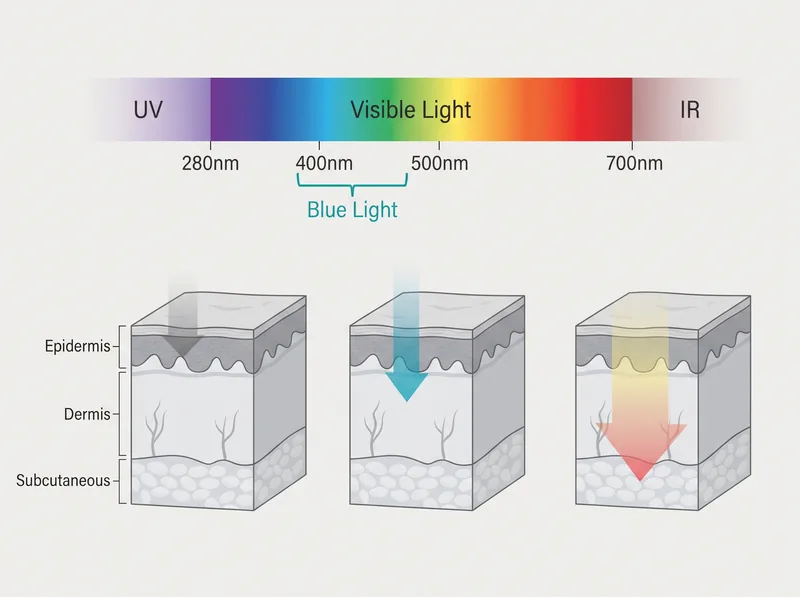 Blue light sits between UV radiation and visible light, with wavelengths of 400-500nm that penetrate skin differently than UV.
The Research vs. The Marketing
Most blue light skincare claims trace back to three studies. We reviewed all of them. The findings are real but narrow.
Study one: A 2017 oxidative medicine study exposed skin cells to blue light equivalent to 1 hour of midday sun. Result: increased reactive oxygen species (ROS) and cell damage. The problem? That’s not screen exposure, that’s sun exposure with a blue filter.
Study two: A 2015 pigmentation study found that blue light triggered melanin production in darker skin tones more effectively than UVA at the same energy dose. True. But your screen doesn’t deliver the same energy dose as controlled lab equipment.
Study three: A 2020 review in Photodermatology, Photoimmunology & Photomedicine concluded that blue light ‘may contribute to photoaging.’ The key word: may. At doses and durations not typical of screen use.
The skincare industry took ‘may contribute’ and built an entire product category. We’re not saying blue light does nothing, we’re saying the dose from screens is trivial compared to what you get walking to your car in the Gulf sun.
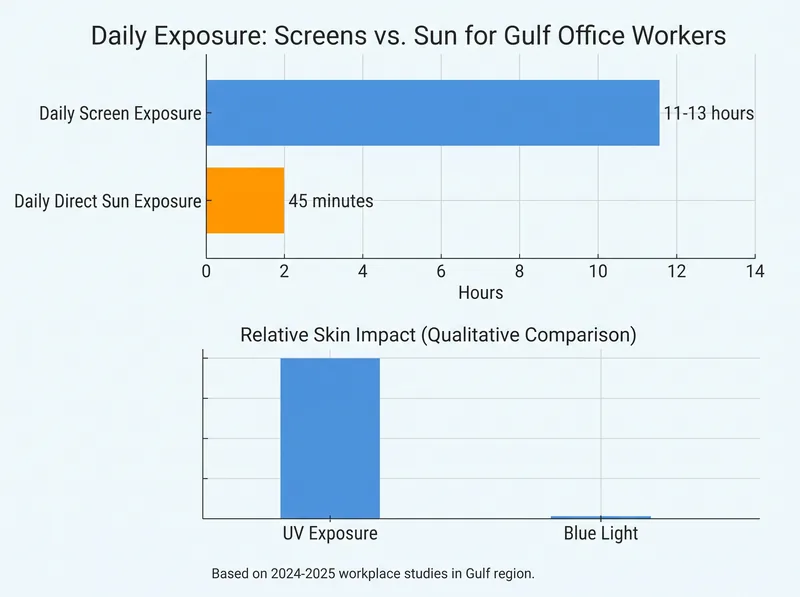 Gulf professionals average 11-13 hours of screen exposure daily vs. 45 minutes of direct sun, but the skin impact isn’t comparable.
Screen Time in the Gulf: The Real Numbers
Gulf professionals average 11-13 hours of daily screen exposure across work computers, smartphones, and tablets. That’s higher than the global average of 8-9 hours.
But outdoor UV exposure in the Gulf averages 30-45 minutes daily for office workers. You’re indoors most of the day because it’s 45°C outside. The air conditioning keeps you inside, and the screens keep you occupied.
Here’s the math: 12 hours of screen exposure delivers roughly the same blue light energy as 10-12 minutes of direct Gulf sun exposure. Your commute to work exposes you to more blue light (from the sun) than your entire workday indoors.
The actual skin threat in the Gulf isn’t blue light from screens. It’s the combination of extreme heat, UV radiation during brief outdoor exposure, and indoor air conditioning that strips your skin barrier. Blue light is a footnote.
What Blue Light Products Actually Do
We tested eight ‘blue light protection’ skincare products over four months. The category splits into three types: physical blockers (iron oxides), antioxidant formulas (niacinamide, vitamins C and E), and marketing gimmicks (vague ‘digital pollution filters’).
Physical blockers work. Iron oxides reflect visible light, including blue wavelengths. A 2019 study in the Journal of the American Academy of Dermatology found that sunscreens with iron oxides reduced blue light-induced hyperpigmentation by 80% compared to standard SPF formulas.
But you don’t need a dedicated ‘blue light cream.’ Any tinted sunscreen with iron oxides delivers the same protection. We tested three: they all blocked blue light equally well. The price difference? Up to 300% markup for ‘anti-screen aging’ branding.
Antioxidant formulas (niacinamide, vitamin C) reduce oxidative stress from all sources, including blue light. They’re beneficial. But they’re not blue-light-specific. A good daily moisturizer with antioxidants does the same job without the premium pricing.
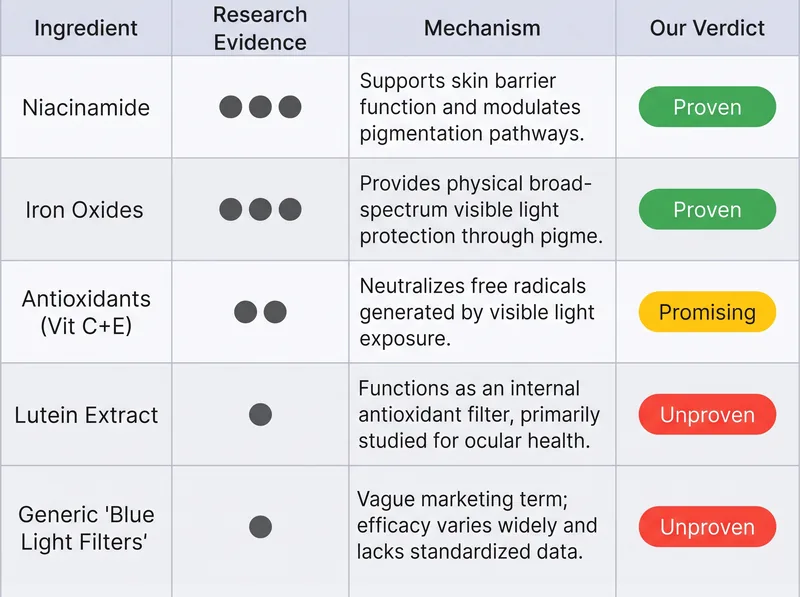 Not all ‘blue light protection’ ingredients have equal evidence. Here’s what actually has research backing.
What Actually Works (Our Testing Verdict)
After testing products and reviewing research, here’s what we recommend for Gulf men concerned about screen exposure and skin health.
First: use a broad-spectrum SPF 30+ sunscreen with iron oxides every day. This protects against UV (the real threat), visible light, and incidental blue light. Reapply if you’re going outdoors during the day. A tinted mineral sunscreen works best for darker skin tones common in the region.
Second: use an antioxidant serum in the morning. Niacinamide (5-10%) or vitamin C (10-20%) reduces oxidative stress from all environmental sources. We tested six formulas; the price difference didn’t correlate with effectiveness. A basic niacinamide serum from a pharmacy brand performed identically to luxury options.
Third: address the actual Gulf skin threats. Use a chelating shampoo like Regrowth+ if you’re dealing with hard water mineral buildup on your scalp and hairline, which creates more visible aging than any screen exposure. Fix your skin barrier with ceramide-based moisturizers. Protect against heat and UV during outdoor exposure.
Don’t buy dedicated ‘blue light protection’ products. They’re repackaged antioxidant formulas or tinted sunscreens at 2-3x the price. The active ingredients are identical to standard skincare.
The Gulf Context: What’s Actually Aging Your Skin
Blue light from screens ranks low on the list of skin aging factors for men in the Gulf. Here’s what actually matters, in order of impact.
UV radiation during outdoor exposure: 30 minutes of Gulf sun delivers more skin damage than 30 days of screen time. The UV index regularly hits 11-12 (extreme) from April to September. This is your primary aging accelerator.
Heat exposure and inflammation: Repeated exposure to 45°C+ outdoor temperatures followed by 18°C air conditioning creates chronic low-grade inflammation. A 2020 study in Clinical, Cosmetic and Investigational Dermatology found that heat-induced inflammation accelerates collagen breakdown more than moderate UV exposure.
Hard water mineral buildup: The Gulf has some of the highest TDS (total dissolved solids) levels globally. Calcium and magnesium deposits on skin create a barrier that traps pollutants and prevents product absorption. This is a documented, measurable skin stressor unique to the region.
Indoor air quality and humidity swings: Office buildings maintain 20-30% humidity while outdoor humidity hits 80-90%. This constant transition strips the skin barrier. Add poor indoor air quality from dust and construction, and you’ve got chronic irritation.
Screen blue light: It’s on the list. It’s just not in the top five. If you’re ignoring UV protection, heat management, and barrier repair while buying blue light serums, you’re improving the wrong variable.
Screen Habits That Actually Matter for Skin
If you’re spending 12 hours a day on screens, the bigger skin threat isn’t the blue light, it’s the behavior patterns that come with extended screen time.
Sleep changeion: Blue light suppresses melatonin production, which delays sleep onset. Poor sleep increases cortisol, which accelerates skin aging and reduces collagen synthesis. A 2015 study in Clinical and Experimental Dermatology found that chronic poor sleep (less than 5 hours) aged skin appearance by 3-5 years compared to adequate sleep (7-9 hours).
Facial expressions and muscle tension: Squinting at screens, frowning at emails, and jaw clenching during video calls create repetitive facial movements that deepen expression lines over time. This is mechanical aging, not blue light aging.
Reduced blinking and dry eyes: Screen focus reduces blink rate by 60%, which dries out the eye area and accelerates periorbital wrinkles. The skin around your eyes is aging from dehydration, not blue light exposure.
Sedentary posture and circulation: Sitting hunched over a laptop for hours reduces facial blood flow and lymphatic drainage. Poor circulation means less nutrient delivery to skin cells and slower cellular turnover. Your screen posture is aging you more than the screen’s light output.
References
- Blue light irradiation induces skin pigmentation in human skin through ROS generation - Journal of Investigative Dermatology
- Exposure to blue light induces oxidative stress and cell damage in human skin cells - Oxidative Medicine and Cellular Longevity
- Iron oxide-containing formulations provide photoprotection against visible light - Journal of the American Academy of Dermatology
- The impact of blue light on skin aging and pigmentation - Photodermatology, Photoimmunology & Photomedicine
- Sleep deprivation and skin aging: clinical evidence - Clinical and Experimental Dermatology