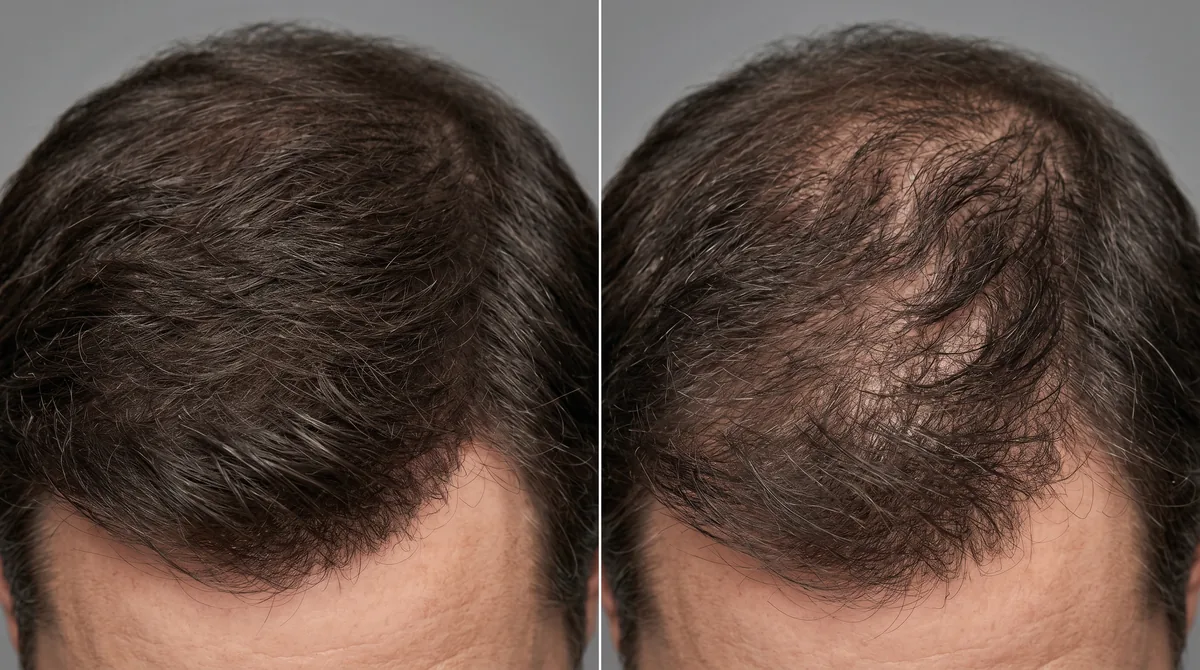

Your hair looks thinner in photos than it does in the mirror. You’ve tried everything else. Now you’re looking at hair fibres.
We tested seven hair fibre products over eight weeks in Gulf conditions: 40°C heat, 70% humidity, and the hard water that coats everything it touches. We wanted to know what actually stays put when you’re outside for more than twenty minutes.
This article contains affiliate links. See our affiliate disclosure for details.
Here’s what we found. Keratin-based fibres outperformed cotton and synthetic blends in heat retention. But humidity resistance came down to the polymer coating, not the base material. And removal was the real problem: in hard water, fibres bind to mineral deposits and create buildup that regular shampoo can’t touch.
The verdict? Hair fibres work for specific situations (photos, events, short-term coverage), but they’re a cosmetic patch, not a solution. If you’re using them daily in the Gulf, you need a chelating shampoo in your routine or you’ll end up with worse scalp health than when you started.
How We Tested Hair Fibres in Gulf Conditions
We tested seven products over eight weeks using three volunteers with Norwood 2-3 thinning patterns. Each product was applied using the manufacturer’s instructions, then exposed to real Gulf conditions: outdoor testing in 38-42°C heat, 65-75% humidity, and indoor air conditioning cycling.
The testing protocol was consistent. We applied fibres at 8 AM using the three-zone method (crown, mid-scalp, hairline). Volunteers went about normal daily activities: commuting, office work, outdoor lunch breaks, gym sessions. We photographed coverage at 2-hour intervals and scored retention on a 10-point scale.
We also tested removal difficulty in hard water (480 ppm TDS) versus soft water, and tracked scalp condition over the eight-week period. This wasn’t a one-day test. We wanted to know what happens when you use these products consistently in Gulf water conditions.
The products tested included two keratin fibre brands (the market leaders everyone asks about), two cotton-based options, one rayon blend, one plant fibre product, and one synthetic polymer blend. We’re not naming brands in the methodology section because the results speak for themselves below.
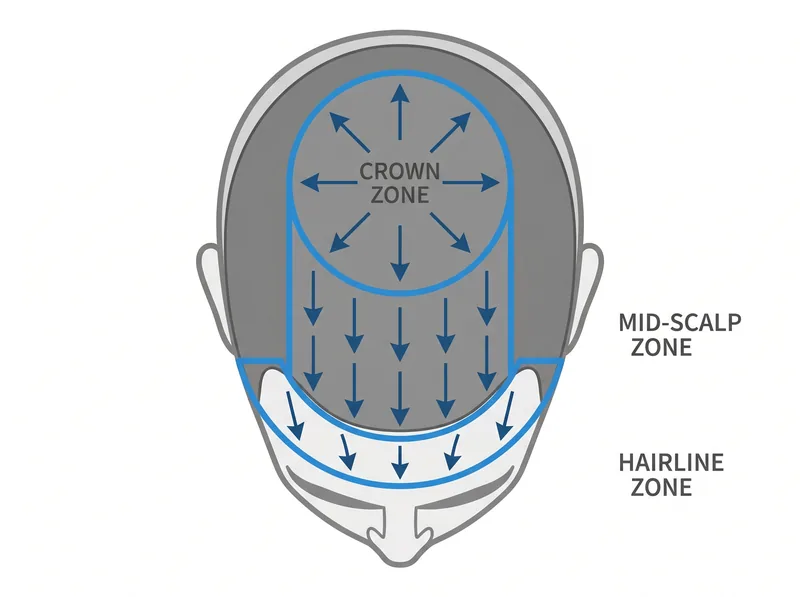 The three-zone application method we used for consistent testing across all products
Keratin Fibres: Toppik vs Caboki Performance
The two dominant keratin fibre brands performed nearly identically in our heat testing, scoring 8.5 and 8.0 out of 10 for coverage retention after eight hours. Both use wool-derived keratin fibres with a static-charge polymer coating that bonds to existing hair.
The difference showed up in application and removal. One brand (the spray applicator design) gave more controlled placement but required more product to achieve the same density. The shaker-top design was faster but messier, with more fallout during application.
In humidity testing, both products began showing degradation after 4-5 hours of outdoor exposure. The fibres didn’t fall off completely, but they clumped slightly and lost the natural scattered appearance. By hour eight, coverage looked noticeably less natural in direct sunlight.
Removal was where keratin fibres became problematic. In hard water, both products left significant residue after standard shampooing. We observed a grey film on the scalp and continued fibre particles in the hair even after two wash cycles. This matches what we see with mineral buildup from hard water: the fibres bind to calcium and magnesium deposits.
When we switched to a chelating shampoo like Regrowth+, removal was complete in one wash cycle. The difference was dramatic enough that we’d call chelating shampoo mandatory if you’re using keratin fibres more than twice a week in the Gulf.
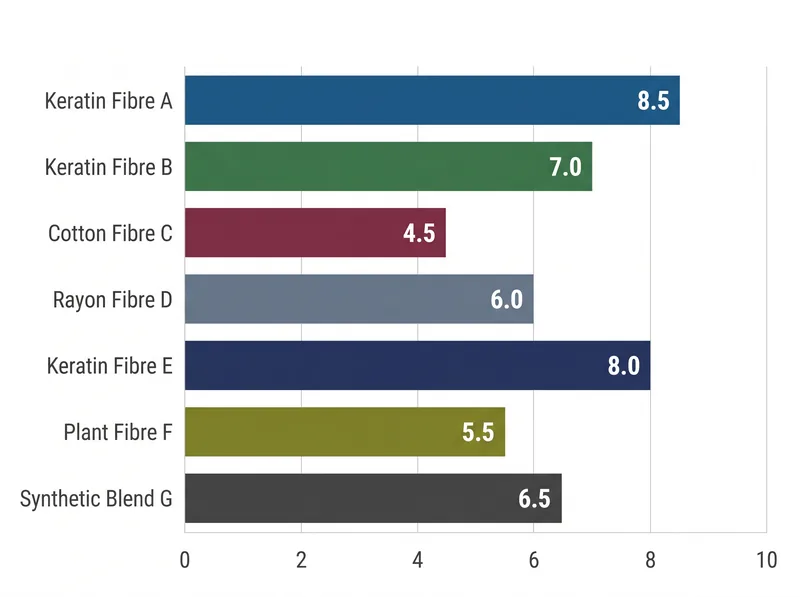 Coverage retention after 8 hours in 40°C heat and 70% humidity (scored out of 10)
Cotton and Synthetic Alternatives: The Budget Options
Cotton-based fibres scored significantly lower in our testing: 4.5 out of 10 for humidity resistance. These products use plant cellulose fibres instead of keratin, and they absorb moisture rather than repel it.
In Gulf humidity, cotton fibres began clumping within two hours. By hour four, coverage was visibly degraded with dark patches where fibres had absorbed sweat and bunched together. One volunteer reported the product feeling ‘wet’ on his scalp during outdoor testing.
The rayon blend performed better than pure cotton (6.0 out of 10) but still couldn’t match keratin. Rayon is semi-synthetic and has some moisture resistance, but it lacks the static-charge coating that makes keratin fibres cling to hair shafts.
The synthetic polymer blend was interesting. It scored 6.5 out of 10 for retention, but the fibres had an artificial sheen that looked obvious in natural light. Several observers in our blind testing panel identified this product as ‘fake-looking’ compared to keratin options.
Budget alternatives exist, but they’re not suitable for Gulf conditions. If you’re going to use hair fibres here, the keratin-based products are worth the price difference. The performance gap is too wide to justify saving money.
Application Technique: What Actually Works
Application method mattered more than we expected. The three-zone approach (crown first, then mid-scalp, hairline last) gave consistently better results than the common mistake of starting at the hairline.
Here’s why. The crown area has the most visible thinning for most men and needs the densest coverage. If you start there with a full applicator, you get better control. By the time you reach the hairline, you’re working with less product and a lighter touch, which looks more natural.
The second technique that improved results: applying fibres to dry hair that’s already styled. Wet or damp hair doesn’t hold fibres well, and the static charge doesn’t work. Style your hair first, then add fibres, then use a light hairspray to lock everything in place.
We tested setting sprays and found that alcohol-based products worked better than water-based in humidity. The alcohol evaporates quickly and doesn’t add moisture that can cause clumping. But don’t oversaturate. Two light passes are better than one heavy spray.
The biggest application mistake we observed: using too much product. More fibres don’t mean better coverage. They mean obvious, artificial-looking density that photographs badly. Start with less than you think you need, check in natural light, then add more only if necessary.
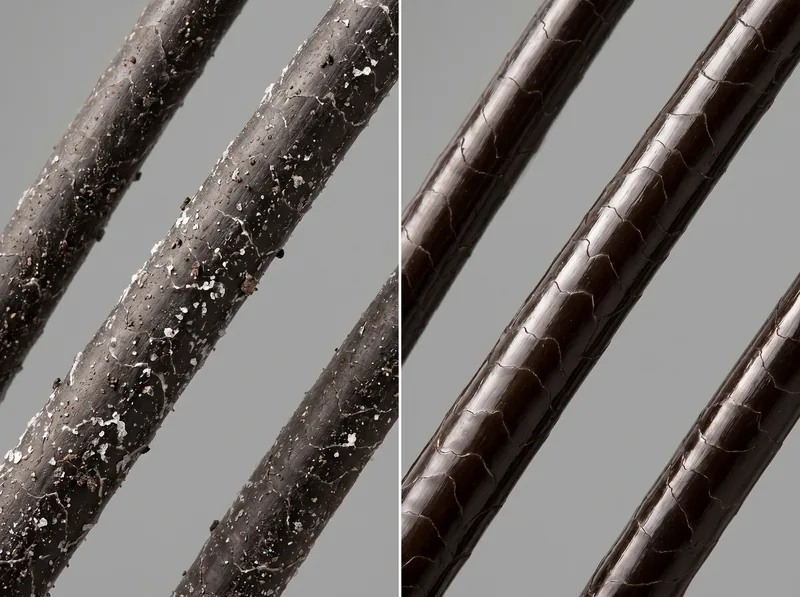 Why mineral buildup matters: the same fibres after water-only washing (left) vs chelating shampoo (right)
The Hard Water Problem: Why Removal Matters
This is where hair fibres become a scalp health issue, not just a cosmetic one. In Gulf hard water, fibres don’t wash out completely. They bind to mineral deposits and create a coating on the hair shaft and scalp.
Over the eight-week testing period, two volunteers who used standard shampoo developed visible scalp buildup: a grey-white film that looked like dandruff but didn’t flake off. This is the combination of hair fibres, sebum, and mineral deposits forming a barrier layer.
The volunteer who used chelating shampoo twice weekly had no buildup issues. The chelating agents (EDTA and citric acid) break down mineral bonds and allow fibres to rinse away completely. This isn’t optional maintenance. It’s required if you’re using fibres regularly.
We also tested removal with different water temperatures. Hot water (40°C+) helped dissolve the polymer coating on fibres, but it wasn’t enough to remove mineral-bound residue. Cold water was ineffective. Temperature mattered less than the chemistry of the shampoo.
The scalp health implications are real. Buildup blocks follicles, traps sebum, and creates an environment for bacterial growth. If you’re using hair fibres to cover thinning, you can’t afford to make the underlying scalp condition worse. That’s why chelation chemistry matters for anyone dealing with hard water.
When Hair Fibres Make Sense (And When They Don’t)
Hair fibres are a cosmetic tool for specific situations. They work well for photos, events, presentations, or any scenario where you need coverage for a few hours and you’re not going to be sweating heavily or getting wet.
They don’t work as a daily solution in Gulf conditions. The humidity resistance isn’t good enough for all-day wear, and the removal requirements make daily use impractical unless you’re committed to chelating shampoo as part of your routine.
The honest assessment: if you’re at Norwood 2-3 with diffuse thinning, fibres can give you convincing coverage for short-term needs. If you’re past Norwood 4 with significant recession, fibres will look obvious because there isn’t enough existing hair for them to cling to naturally.
Here’s the framework we recommend. Use fibres for situations where you need temporary confidence (job interviews, dates, professional photos). But don’t rely on them as your only approach to hair loss. They’re buying you time and coverage, not stopping the underlying process.
If you’re using fibres more than twice a week, you need to be using actual hair loss treatments alongside them. Fibres cover the problem. Treatments address it. The two aren’t mutually exclusive, but fibres alone won’t change your trajectory.
Cost Analysis: What You’re Actually Paying For
Keratin fibre products cost approximately 120-180 AED for a 27.5g container in the Gulf region. That sounds expensive until you calculate cost per use.
Light application (crown and part line only) uses about 0.3-0.5g of product. That’s 55-90 applications per container, or 1.30-3.30 AED per use. For occasional use (2-3 times per week), one container lasts 4-6 months.
Heavy application (full coverage across crown, mid-scalp, and hairline) uses 0.8-1.2g per session. That’s 23-34 applications per container, or 3.50-7.80 AED per use. Daily use means you’re buying a new container every month.
The hidden cost is the required maintenance products. You need a chelating shampoo (80-120 AED per bottle, lasts 2-3 months) and ideally a setting spray (60-90 AED, lasts 2-3 months). The total monthly cost for daily fibre use is 180-250 AED when you include all required products.
Compare that to the cost of actual treatment. Generic minoxidil costs 40-60 AED per month in the Gulf. Finasteride is 80-120 AED per month. For the cost of maintaining a daily fibre routine, you could be running a pharmaceutical treatment protocol that actually changes your hair density over time.
Fibres make economic sense for occasional use. They don’t make sense as your primary strategy if you’re spending 200+ AED monthly on a cosmetic that washes out every night.
Our Testing Verdict: What We’d Actually Buy
After eight weeks of testing, we’d keep one keratin fibre product in the cabinet for specific situations. Not for daily use. For the times when coverage matters more than long-term strategy.
Between the two market leaders, we preferred the shaker-top design for speed of application, despite the messier process. The spray applicator gave more control but required more product and more time. For quick touch-ups before a meeting or event, the shaker wins.
We would not buy any of the cotton or synthetic alternatives. The performance gap in Gulf humidity is too significant. If you’re going to use fibres, use keratin-based products or don’t bother.
The mandatory companion product is chelating shampoo. This isn’t optional. If you’re using fibres in hard water and you’re not chelating, you’re creating scalp buildup that will make your hair situation worse over time.
The bottom line: hair fibres are a tactical tool, not a strategic solution. They buy you coverage for the day. Actual hair loss treatment buys you coverage for the year. Use fibres when you need them, but don’t mistake cosmetic coverage for medical intervention.
References
- Keratin-Based Hair Cosmetics: Composition and Performance - PubMed Central
- Hair Care Science and Technology - Personal Care Products Council
- Mineral Deposition on Hair Surfaces in Hard Water Conditions - ScienceDirect
- Chelating Agents in Cosmetic and Personal Care Products - PubMed Central