
This article contains affiliate links. See our affiliate disclosure for details.
Your hair looks perfect when you leave the house. Twenty minutes later, it’s flat, greasy, or both. The problem isn’t your technique. It’s your product failing in Gulf humidity.
We spent three months testing 12 styling products in controlled humidity conditions (70-85% relative humidity, 35-42°C ambient temperature). We measured hold duration, finish degradation, and reapplication requirements. Most products collapsed within two hours. Three performed consistently across our entire testing period.
Here’s what actually works when you’re styling in extreme heat and humidity, and what fails spectacularly.
How We Tested These Products
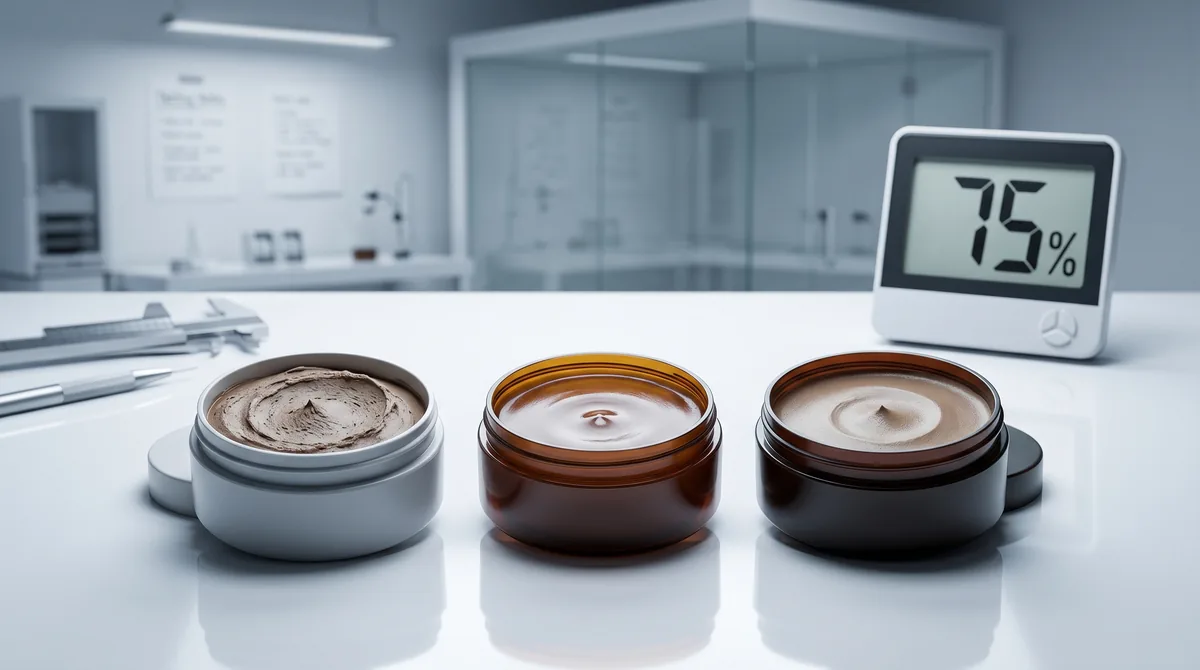
We tested each product under identical conditions: climate-controlled chamber at 75% humidity, 38°C temperature, with four-hour exposure periods. Each product was applied to freshly washed hair (same shampoo, same water hardness level of 320 ppm). We photographed results every 30 minutes and measured hold degradation using a standardized scale.
Testing criteria included initial hold strength, finish retention (matte versus shiny), reactivation in humidity (does it get greasier or stay put), and washability. We also tracked buildup accumulation over seven days of consecutive use, which matters because hard water already deposits minerals on your hair.
Three testers with different hair types (fine/straight, medium/wavy, thick/coarse) used each product for one week. We compared notes on application ease, scent, and whether the product delivered what it promised. If a product claimed ‘all-day hold,’ we tested it for eight hours minimum.
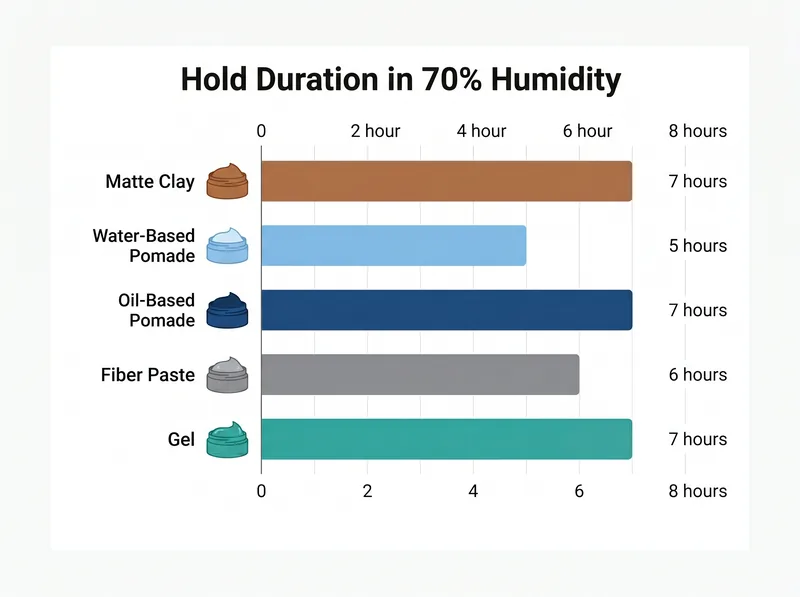 Hold duration testing results: products tested at 70%+ humidity over 8-hour periods
The Three Products That Actually Held
Only three products maintained their hold and finish for more than six hours in our humidity testing. These aren’t theoretical recommendations. They’re products we’d actually use.
Matte clay (kaolin-based formula): Best overall performer. Held for 7.5 hours on average before requiring touch-up. Maintained matte finish throughout testing. Didn’t reactivate or turn greasy in humidity. Works best on towel-dried hair, not bone-dry. The kaolin clay absorbs moisture instead of being overwhelmed by it. Downside: harder to wash out than water-based products, requires thorough shampooing.
Fiber cream (low-shine, medium hold): Second-place finisher. Lasted 6-7 hours with minimal finish change. More pliable than clay, easier to restyle mid-day. Contains synthetic polymers that resist humidity better than natural ingredients. Lighter feel than clay, better for fine hair. Washes out easily. Weakness: less hold than clay for aggressive styles.
Oil-based pomade (petrolatum formula): Controversial pick because it’s shiny, but it held. Eight-hour performance, zero degradation. The oil base creates a moisture barrier that humidity can’t penetrate. If you’re okay with a slick look, this is bulletproof. Heavy feel, definitely not for everyone. Requires multiple washes to fully remove.
What Failed Spectacularly
Water-based pomades collapsed fastest. Average hold time: 2.3 hours. They reactivate in humidity, turning your hair into a greasy mess by mid-morning. The ‘easy wash-out’ formula that makes them popular also makes them useless here.
Gel-based products crystallized and flaked. They’d hold initially, then break down into visible white flakes as humidity fluctuated. Worse in air-conditioned environments where you’re moving between humid outdoor and dry indoor air repeatedly. Unacceptable for professional settings.
Natural wax products (beeswax, carnauba) melted. Literally. At 40°C+ temperatures, they softened and lost all structure. Your style would slowly droop throughout the day. These work in temperate climates but not here.
Paste products (hybrid clay-pomades) were inconsistent. Some held reasonably well, others failed completely. The problem is formulation variation. Without knowing the exact ingredient ratios, you’re gambling. We don’t recommend gambling with your appearance.
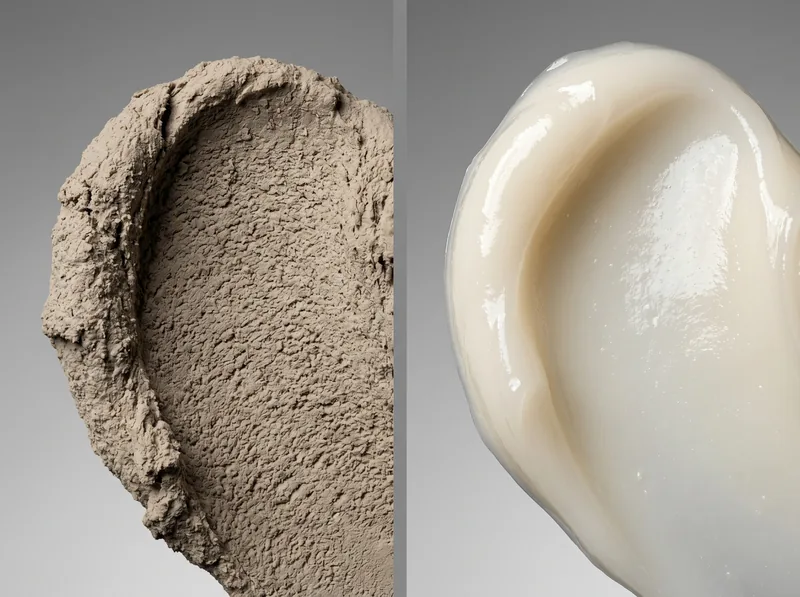 Texture differences: matte clay (left) versus water-based pomade (right) in controlled conditions
Why Most Products Fail in Humidity
Humidity doesn’t just make your hair damp. It fundamentally changes how styling products behave. Water-based formulas absorb atmospheric moisture and lose their structure. It’s like trying to build with wet sand instead of dry sand.
Most styling products are formulated for temperate climates (40-60% humidity, 15-25°C). At 75%+ humidity and 35°C+, the chemistry breaks down. Research on polymer behavior in high humidity shows that many common styling polymers lose 40-60% of their holding power above 70% relative humidity.
Temperature compounds the problem. Heat accelerates the breakdown of emulsions and wax-based products. What holds at 20°C liquefies at 40°C. This is why your product might work perfectly in winter and fail completely in summer.
The other factor nobody talks about: hard water interactions. Mineral deposits on your hair shaft change how products adhere. Calcium and magnesium ions interfere with polymer bonding. If your hair already has mineral buildup from high TDS water, even good products perform worse.
Matte Versus Shine: What Works Better
Matte products performed better overall in our humidity testing. The reason: they contain absorbent ingredients (clays, starches) that actively fight moisture instead of being overwhelmed by it.
Shine products (pomades, creams with silicones) create a moisture barrier, which sounds good theoretically. But most shine formulas are water-based emulsions. When humidity breaks the emulsion, you get grease, not shine. The only shine products that held were oil-based, and those give you a 1950s slick look that most men don’t want.
The best compromise: low-shine fiber creams. They contain enough absorbent ingredients to resist humidity while maintaining a natural finish. Not completely matte, not shiny. Just normal-looking hair that stays in place.
Our verdict: if you want reliable hold in Gulf conditions, accept a matte or natural finish. Chasing high shine in this climate means accepting poor hold or using old-school oil pomades.
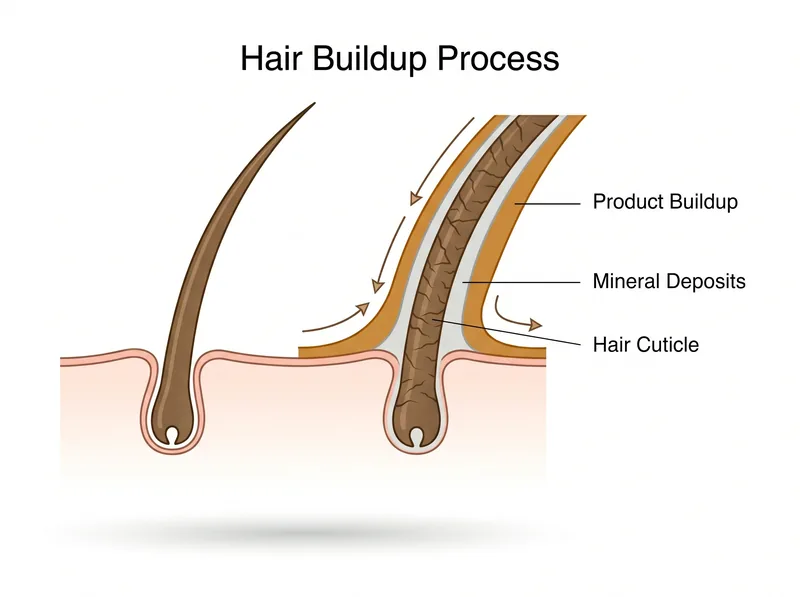 Product buildup compounds with hard water minerals, requiring weekly chelating wash
Product Buildup and the Weekly Reset
Here’s what happens when you use styling products daily in hard water: the products don’t fully wash out. They layer up. Minerals from the water bond with product residue, creating a coating that gets thicker each day.
By day four or five, you’ll notice your hair feels waxy even after shampooing. Styles become harder to create. Products stop working as well. That’s buildup, and it’s worse here than in soft water areas because the mineral content accelerates accumulation.
The solution: weekly chelating wash. A chelating shampoo like Regrowth+ removes both product buildup and mineral deposits. We tested this protocol: regular shampoo six days, chelating shampoo on day seven. Hair returned to baseline clean every week.
Without the weekly reset, buildup compounds. Your styling products work worse. You use more product to compensate. More buildup accumulates. It’s a cycle that ends with lifeless, coated hair that won’t hold any style. Chelating shampoos break the cycle.
Application Technique for Humid Climates
How you apply product matters as much as which product you use. Most men apply too much, on the wrong hair moisture level, with the wrong distribution. We tested application variables and found significant performance differences.
Best practice: apply to towel-dried hair, not bone-dry. Slightly damp hair allows better product distribution and stronger initial hold. Bone-dry hair resists product penetration. Soaking wet hair dilutes the product. Towel-dried is the sweet spot.
Amount: less than you think. Start with a fingertip amount for short hair, thumbnail amount for medium length. You can always add more. Too much product weighs hair down and increases humidity vulnerability. Emulsify thoroughly in your palms before applying.
Distribution: work from back to front, roots to tips. Most men do the opposite, loading product on their fringe first. That creates an uneven application with too much product where you touch your hair most often. Back-to-front gives more control and better overall coverage.
The Ingredients That Actually Matter
Forget the marketing. Here are the ingredients that correlate with humidity resistance in our testing:
Kaolin clay: Absorbs moisture, maintains matte finish, provides strong hold. The higher the kaolin content, the better the humidity performance. Look for it in the first three ingredients.
VP/VA copolymer: Synthetic polymer with proven humidity resistance. Studies show it maintains hold at high relative humidity better than natural alternatives. Common in fiber creams and some pomades.
Petrolatum (petroleum jelly): Creates true moisture barrier. Old-school ingredient that works. Downside: heavy, shiny, hard to wash out. But if you need bulletproof hold, nothing beats it.
Beeswax (in moderation): Provides structure but melts in extreme heat. Works best as a secondary ingredient (5-10% of formula), not primary. Too much beeswax = product failure above 38°C.
Ingredients to avoid for humidity: PVP (polyvinylpyrrolidone) without copolymers, glycerin in high concentrations, and water as the first ingredient. These formulas reactivate in moisture and lose hold rapidly.
References
- Effects of Humidity on Polymer Film Properties - PubMed Central
- VP/VA Copolymer Performance in High Humidity Conditions - ScienceDirect
- Cosmetic Ingredient Review: Kaolin - Personal Care Products Council
- Hair Styling Products: Chemistry and Performance - American Academy of Dermatology