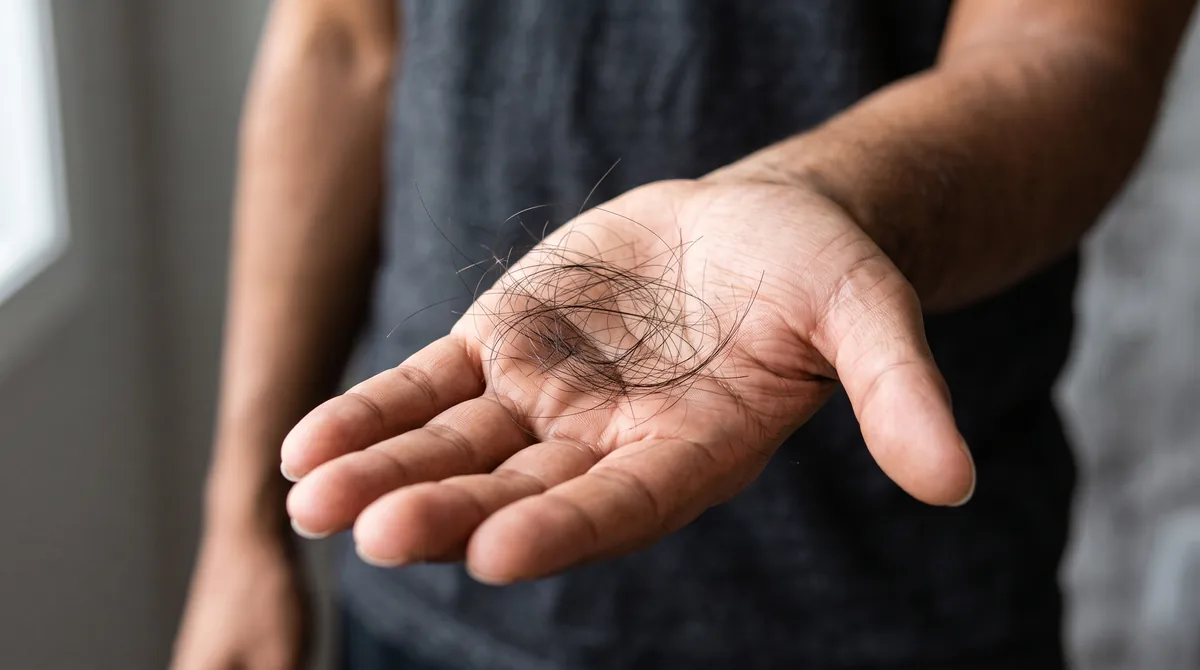

You switched to keto to lose weight, gain energy, or improve metabolic health. Three months in, your shower drain is clogged. Your pillow has more hair on it than your head. You’re losing clumps when you run your fingers through your scalp. This wasn’t in the keto sales pitch.
This is telogen effluvium, and it’s one of the most common side effects of rapid dietary change. It’s also temporary and reversible if you understand what’s happening and how to fix it. We’re going to walk through the mechanism, the timeline, and the specific interventions that stop the shedding without forcing you to abandon your diet.
This article contains affiliate links. See our affiliate disclosure for details.
The good news: this isn’t androgenic alopecia. It’s not permanent pattern baldness. It’s a stress response. Your body perceived the diet shift as a threat, pushed follicles into a resting phase, and now they’re shedding on a delay. The hair will grow back. But you need to address the nutritional gaps and metabolic stress that triggered it in the first place.
What Telogen Effluvium Is and Why Keto Triggers It
Telogen effluvium is a temporary hair loss condition where a large number of follicles prematurely enter the telogen (resting) phase of the hair growth cycle. Normally, about 10 percent of your hair is in telogen at any given time. During telogen effluvium, that percentage can jump to 30-40 percent, leading to noticeable shedding 2-4 months after the triggering event.
Keto triggers this through multiple pathways. First, rapid weight loss itself is a metabolic stressor. A 2002 study in Dermatology found that caloric restriction and rapid weight loss are established causes of diffuse hair shedding. When you drop 5-10 kilograms in the first month of keto, your body interprets this as a survival threat and diverts resources away from non-essential functions like hair growth.
Second, the transition into ketosis creates a temporary state of metabolic stress. Your body is switching fuel sources from glucose to ketones, and during this adaptation period (typically 1-4 weeks), cortisol levels rise. Improved cortisol is directly linked to telogen effluvium. Research published in the International Journal of Trichology confirms that stress hormones can shift follicles out of the growth phase.
Third, restrictive diets often create micronutrient deficiencies. Biotin, iron, zinc, and protein are all critical for hair health, and all are commonly under-consumed or poorly absorbed on keto. We’ll cover the specific deficiencies in detail below, but the pattern is consistent: when nutrient intake drops below the threshold required for follicle maintenance, shedding accelerates.
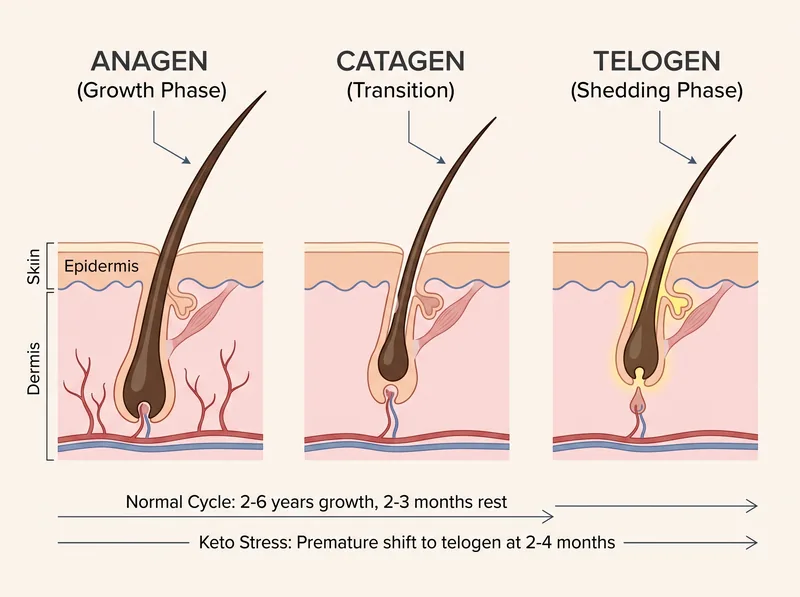 The hair growth cycle: keto stress can prematurely push follicles from anagen (growth) into telogen (shedding)
The Timeline: When Shedding Starts and When It Stops
The shedding doesn’t start immediately. That’s the confusing part. You begin keto in January, feel great in February, and by April your hair is falling out. The delay is built into the hair cycle. When a follicle is pushed into telogen, the hair doesn’t fall out right away. It stays anchored for 2-4 months before the follicle releases it and begins growing a new hair.
Here’s the typical timeline: Week 0-4 (keto initiation): metabolic stress, cortisol spike, nutrient depletion begins. Follicles shift into telogen, but you don’t notice anything yet. Week 8-16 (shedding phase): the hairs that entered telogen 2-4 months ago start falling out. This is when you panic. Shedding peaks around month 3-4 after starting the diet. Week 16-24 (recovery phase): if you’ve addressed the nutritional gaps, new hairs begin growing. Shedding tapers off. Week 24-52 (regrowth phase): new hair becomes visible. Full recovery takes 6-12 months from the point you correct the deficiencies.
The key insight: by the time you notice the shedding, the damage was done months ago. You can’t reverse what’s already in telogen, but you can stop new follicles from entering that phase. The sooner you intervene, the less total hair you’ll lose.
The Four Nutrient Deficiencies Driving Keto Hair Loss
Biotin (vitamin B7) is the most commonly cited deficiency, but it’s also the most overstated. The American Academy of Dermatology notes that true biotin deficiency is rare in people eating a varied diet. However, keto eliminates many biotin-rich foods like legumes, whole grains, and certain fruits. If you’re not eating eggs, nuts, or organ meats regularly, you’re at risk. The recommended intake is 30 mcg daily; therapeutic doses for hair health range from 2,500-5,000 mcg.
Iron deficiency is more insidious. Keto reduces carbohydrate intake, which impairs iron absorption from plant sources. If you’re relying on spinach and nuts for iron instead of red meat, you’re not absorbing enough. Ferritin (stored iron) levels below 40 ng/mL are associated with increased hair shedding in men, even if you’re not clinically anemic. A 2006 study in the Journal of the American Academy of Dermatology found that low ferritin was present in 72 percent of women with chronic telogen effluvium, and the pattern holds for men as well.
Protein is the structural foundation of hair. Each strand is made of keratin, a protein. On keto, many people prioritize fat intake and under-consume protein, aiming for 20-25 percent of calories from protein when they should be hitting 25-35 percent. For a 90-kilogram man, that’s a minimum of 108 grams of protein daily, and ideally closer to 140 grams. If you’re not hitting that consistently, your body will prioritize protein for essential functions (muscle, organs) and sacrifice hair growth.
Zinc depletion happens because high protein intake increases zinc excretion through urine. Keto is a high-protein diet for most people, which means you’re losing more zinc than you would on a balanced diet. The recommended daily intake is 11 mg for men, but therapeutic doses for hair health range from 25-50 mg. Research in Dermatologic Therapy shows that zinc supplementation can reduce shedding in people with deficiency-related hair loss.
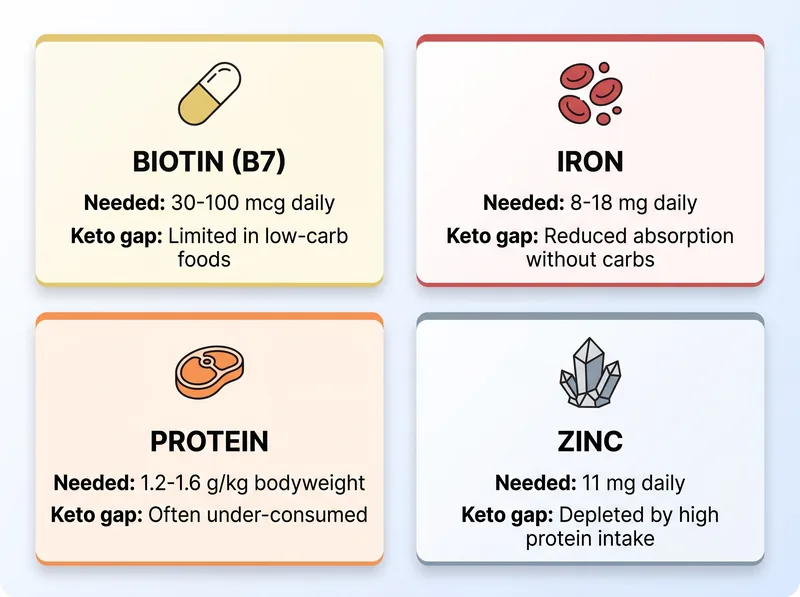 Four critical nutrients often depleted on keto: adequate intake prevents most diet-induced shedding
How to Stop the Shedding Without Quitting Keto
The first step is to test your nutrient levels. Get a blood panel that includes ferritin, zinc, vitamin D, and a complete metabolic panel. Don’t guess. If your ferritin is below 40 ng/mL, you need iron supplementation. If zinc is low, you need supplementation. If vitamin D is below 30 ng/mL, that’s another contributor to hair loss that’s unrelated to keto but common in the Gulf region. For more on that, see our guide on vitamin D and hair loss.
Second, recalculate your macros to prioritize protein. Use the formula: 1.6 grams of protein per kilogram of bodyweight. For a 90 kg man, that’s 144 grams daily. Track it for a week to make sure you’re hitting the target. If you’re not, add a protein shake, eat more eggs, or increase your meat portions. Protein is non-negotiable for hair health.
Third, add a targeted supplement stack. Biotin at 5,000 mcg daily. Zinc at 25-50 mg daily (take with food to avoid nausea). Iron if your ferritin is low (18-27 mg daily, preferably chelated iron like ferrous bisglycinate for better absorption). Consider a B-complex to cover all B vitamins, not just biotin. These aren’t magic pills, but they close the nutritional gaps that keto creates.
Fourth, slow down your weight loss if you’re still in a steep caloric deficit. Losing more than 1 kilogram per week is metabolically stressful and will prolong the shedding. Increase your calorie intake by 200-300 calories daily, primarily from fat or protein. You’ll still lose weight, but at a pace that doesn’t trigger additional telogen effluvium.
Fifth, manage stress and sleep. Chronic stress compounds the cortisol spike from keto adaptation. If you’re sleeping less than 7 hours, training hard, and restricting calories aggressively, you’re stacking stressors. Scale back training volume, prioritize 7-8 hours of sleep, and consider adding a daily walk or meditation practice to lower baseline cortisol. For more on the cortisol-hair connection, read our article on sleep and hair loss.
Finally, address environmental stressors specific to the Gulf. Hard water, high heat, and humidity all worsen scalp health. Use a chelating shampoo like Regrowth+ to remove mineral buildup that clogs follicles and prevents nutrient delivery to the scalp. This is especially critical if you’re already dealing with keto-induced shedding. For a full breakdown of hard water’s impact, see our guide on hard water in the GCC.
When to Stop Keto and When to Push Through
If you’ve addressed all the nutritional gaps, corrected your macros, and the shedding continues for more than 6 months, it’s time to reevaluate. Prolonged telogen effluvium (lasting more than 6 months) can transition into chronic telogen effluvium, which is harder to reverse. At that point, the diet itself may not be worth the trade-off.
However, most people see improvement within 8-12 weeks of making the corrections outlined above. The shedding tapers off, and new hair growth becomes visible. If you’re in that recovery window, push through. The hair will come back.
One exception: if you have pre-existing androgenic alopecia (male pattern baldness), keto can accelerate the progression. Rapid weight loss and nutrient deficiencies can push miniaturized follicles into permanent dormancy. If you’re already thinning at the temples or crown, keto may not be the best diet for you unless you’re also using treatments like minoxidil or finasteride to protect those follicles. For more on that, see our comparison of finasteride vs minoxidil.
The bottom line: keto-induced hair loss is reversible if it’s purely telogen effluvium. But if you’re genetically predisposed to pattern baldness, the metabolic stress from keto can unmask or accelerate that process. Know the difference.
What the Research Actually Says About Keto and Hair
There’s limited direct research on ketogenic diets and hair loss, but the mechanisms are well-established. A 2017 review in Skin Appendage Disorders examined nutritional deficiencies and hair loss, concluding that restrictive diets (including low-carb and ketogenic diets) are a common trigger for telogen effluvium. The review emphasized that protein, iron, zinc, and biotin are the most critical nutrients for maintaining the anagen (growth) phase.
Another study published in Dermatology Practical & Conceptual in 2017 analyzed 100 cases of chronic telogen effluvium and found that 35 percent were associated with dietary changes, including low-calorie and low-carbohydrate diets. The researchers noted that the shedding was reversible in 80 percent of cases once nutritional deficiencies were corrected.
The takeaway: keto doesn’t directly damage hair follicles, but the rapid metabolic shift and nutrient gaps it creates can trigger a stress response that leads to shedding. The solution isn’t to demonize the diet, but to improve it for hair health.
References
- Caloric Restriction and Hair Loss: A 2002 Study - Dermatology
- Stress Hormones and Telogen Effluvium - International Journal of Trichology
- Biotin and Hair Loss: AAD Guidelines - American Academy of Dermatology
- Ferritin Levels and Chronic Hair Shedding - Journal of the American Academy of Dermatology
- Nutritional Deficiencies and Hair Loss: 2017 Review - Skin Appendage Disorders