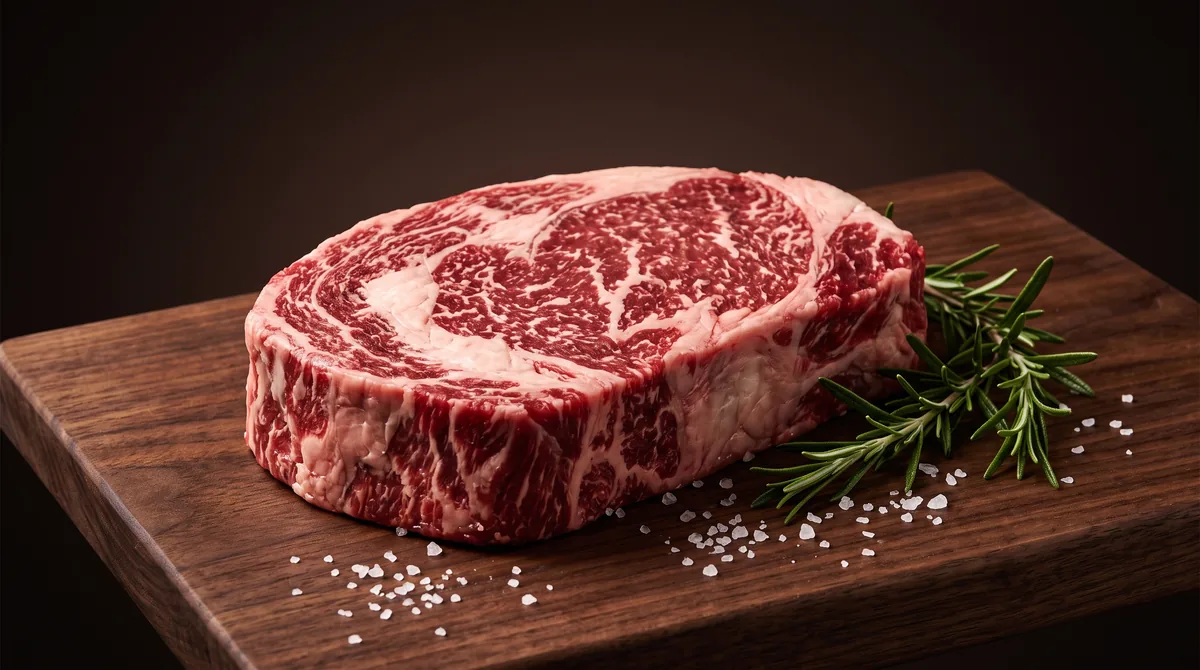

Men eating nothing but animal products report wildly different hair outcomes. Some say their hair thickened after six months of ribeyes and eggs. Others shed aggressively within weeks and never recovered. The carnivore diet has become one of the most polarizing nutrition experiments in men’s health, and hair is caught in the middle.
We reviewed the clinical evidence, tracked anecdotal reports from carnivore communities, and examined what’s actually happening to follicles when you eliminate plants entirely. The results don’t fit the narrative either side wants to hear.
This article contains affiliate links. See our affiliate disclosure for details.
What the Carnivore Community Reports About Hair
The anecdotes split into three camps. First group: men who report thicker, faster-growing hair after three to six months on carnivore. They attribute it to higher protein intake, elimination of seed oils, and better nutrient absorption. Second group: men who experience aggressive shedding in the first 90 days, then stabilization with no net improvement. Third group: men who shed and never regrow, eventually abandoning the protocol.
The most common pattern we found in forums and Reddit threads: initial shedding during the adaptation phase (weeks 2-12), followed by either regrowth starting around month 4-6, or continued thinning with no recovery. The divergence suggests individual metabolic response, not a universal outcome.
One consistent theme: men with pre-existing androgenetic alopecia rarely report improvement. The diet doesn’t override genetic hair loss. Men without pattern baldness show more variable results, some positive, many neutral.
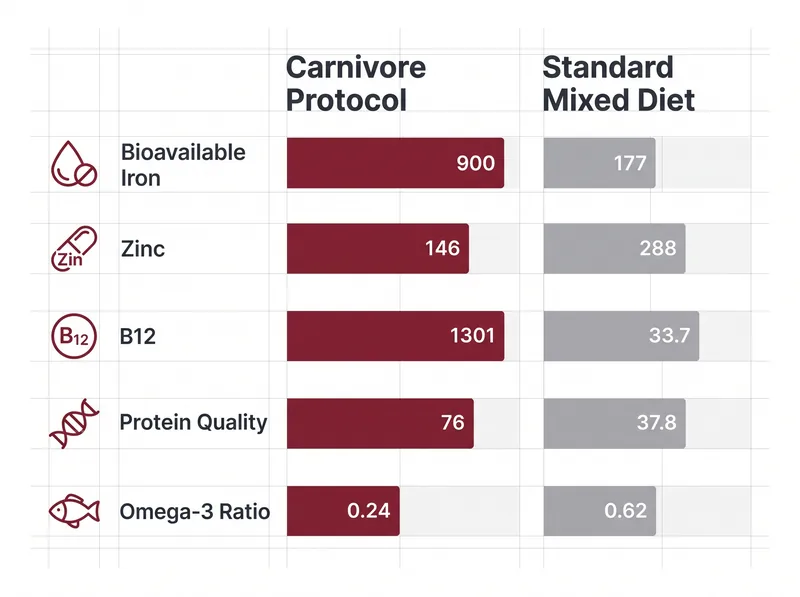 Bioavailable nutrient comparison: carnivore protocol versus mixed diet for hair follicle support
The Nutrient Argument: What Carnivore Provides for Hair
Carnivore advocates point to several hair-supportive nutrients abundant in animal products. Heme iron, the most bioavailable form, is critical for oxygen delivery to follicles. Zinc from red meat supports keratin synthesis. B12, found exclusively in animal products, prevents anemia-related shedding.
Protein intake on carnivore typically exceeds 150g daily for most men, well above the threshold needed for hair growth. Collagen and glycine from connective tissue may support follicle structure, though direct evidence is limited. Omega-3 from fatty fish provides anti-inflammatory support.
The diet also eliminates common inflammatory triggers: gluten, lectins, oxalates, and processed seed oils. For men with undiagnosed food sensitivities, this removal can reduce systemic inflammation that may have been affecting scalp health. But that’s a subset, not the majority.
The Adaptation Shed: Why Hair Falls Out Initially
The first 90 days of carnivore often trigger telogen effluvium, a stress-induced shedding phase. Your body interprets the macronutrient shift as metabolic stress. Cortisol rises during adaptation. Follicles respond by entering the resting phase prematurely.
This isn’t unique to carnivore. Any drastic dietary change can trigger shedding: keto, intermittent fasting, caloric restriction. The mechanism is the same. The body prioritizes survival over cosmetic functions like hair growth. Follicles shut down temporarily.
Most men who push through this phase see regrowth starting around month 4-6. The key word: most. For some, the shedding continues beyond the adaptation window, suggesting the diet isn’t providing what their specific follicles need, or that underlying deficiencies are worsening.
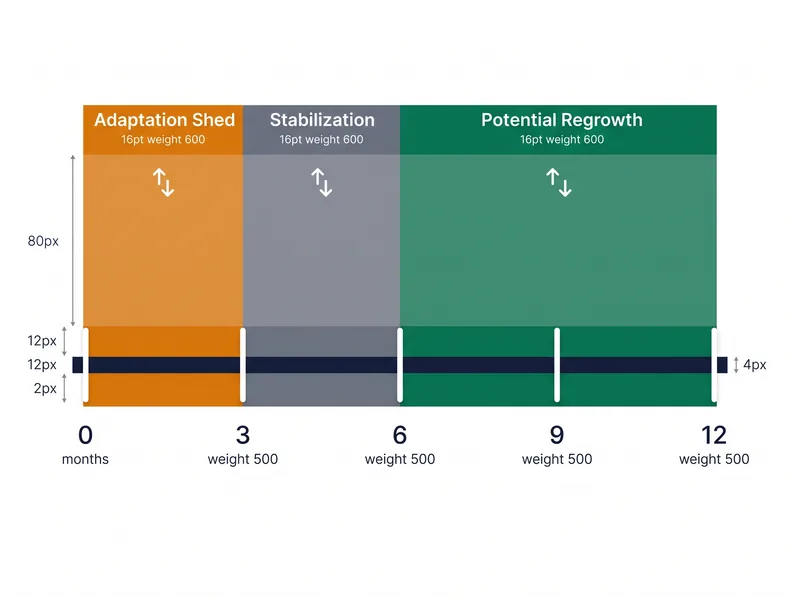 Common hair response pattern during carnivore adaptation: initial shedding followed by potential regrowth phase
The Deficiency Risk: What Carnivore Removes
Carnivore eliminates all plant-based nutrients. That includes vitamin C, folate, fiber, polyphenols, and most phytonutrients. While the body can synthesize some vitamin C from glucose, and folate needs drop on low-carb diets, complete absence creates risk over time.
Copper deficiency is a documented concern. Animal products contain copper, but not in high amounts unless you’re eating organ meats regularly. Copper deficiency causes hair depigmentation and structural changes to the hair shaft. Most carnivore dieters don’t track copper intake.
Iodine is another gap unless you’re eating seafood daily. Thyroid function depends on iodine, and thyroid dysfunction is a direct cause of hair thinning. Men in the Gulf already face environmental stressors on thyroid function. Removing iodine-rich plants without replacing them with seafood compounds the risk.
The diet also lacks prebiotic fiber. Gut microbiome composition shifts dramatically on carnivore, and emerging research links gut health to scalp inflammation and follicle cycling. We don’t yet know if the carnivore gut shift is beneficial or detrimental for hair long-term.
The Hormonal Shift: Testosterone, DHT, and Insulin
Carnivore typically increases testosterone in men with low baseline levels. Higher protein and saturated fat intake support androgen production. For men with normal testosterone, the effect is smaller. But testosterone isn’t the full story.
DHT, the androgen that miniaturizes follicles in pattern baldness, may also rise. If you’re genetically predisposed to androgenetic alopecia, higher DHT accelerates thinning. The diet doesn’t protect you. It may speed up the process you were already experiencing.
Insulin drops significantly on carnivore due to near-zero carbohydrate intake. Lower insulin reduces IGF-1, which some research suggests may slow follicle miniaturization. But the trade-off is cortisol improvion during adaptation, which damages follicles acutely. The net effect depends on how long you stay in the adaptation stress phase.
Who Might Benefit and Who Won’t
Men most likely to see hair improvement on carnivore: those with undiagnosed food sensitivities causing chronic inflammation, men with low baseline protein intake, men with insulin resistance or metabolic syndrome, and men who weren’t eating organ meats or red meat before (nutrient deficiency correction).
Men unlikely to benefit: those with genetic pattern baldness (the diet doesn’t block DHT), men already eating high-protein diets with good nutrient density, men with thyroid issues who don’t supplement iodine, and men who can’t tolerate the adaptation stress (chronic cortisol improvion).
The diet is not a hair loss treatment. It’s a metabolic intervention that may improve the conditions for hair growth if your baseline diet was inflammatory or nutrient-poor. If your hair loss is genetic, hormonal, or environmental (like hard water damage), carnivore won’t override those factors.
Practical Considerations for Gulf Men
Sourcing quality animal products in the Gulf is straightforward, but the climate adds complexity. Higher ambient temperatures increase water and electrolyte needs. Carnivore already depletes sodium and potassium during adaptation. Combine that with Gulf heat, and you’re at higher risk for dehydration, which directly affects scalp circulation.
Hard water remains a factor. Even if your diet improves internal hair health, external mineral buildup from showering will still damage the hair shaft. A chelating shampoo like Regrowth+ removes the calcium and magnesium deposits that carnivore can’t address. Nutrition and water quality are separate problems requiring separate solutions.
Social dining becomes difficult. The Gulf’s food culture centers on rice, bread, and communal meals. Carnivore isolates you from that. The psychological stress of social exclusion can raise cortisol, which damages follicles. If the diet increases your stress load, the hair benefits may not materialize.
Our Verdict on Carnivore for Hair
Carnivore is not a hair growth protocol. It’s a metabolic reset that may improve hair as a secondary effect if your baseline diet was poor or inflammatory. The adaptation phase will likely cause shedding. Whether you regrow depends on factors the diet doesn’t control: genetics, stress management, thyroid function, and whether you’re supplementing the nutrients carnivore removes.
If you’re considering carnivore for hair, track your thyroid markers (TSH, free T3, free T4), copper, and iodine before starting. Retest at 3 and 6 months. If markers decline, the diet is creating deficiencies that will damage hair long-term. Supplement accordingly or reintroduce targeted plant foods.
For men already using finasteride or minoxidil, carnivore doesn’t replace those treatments. It may support them by improving metabolic health, but it won’t block DHT or stimulate follicles directly. The diet is a foundation, not a cure.