
This article contains affiliate links. See our affiliate disclosure for details.
You’ve heard the theory. Better circulation means more nutrients to your follicles. Cardio boosts blood flow. Scalp massage stimulates growth. Compression gear might even help. It sounds logical. But does it actually work?
We dug into the research on scalp blood flow and hair growth. Here’s what the science shows about circulation, what happens at the follicle level, and whether improving blood flow makes any real difference to your hair.
The Dermal Papilla: Where Blood Flow Actually Matters
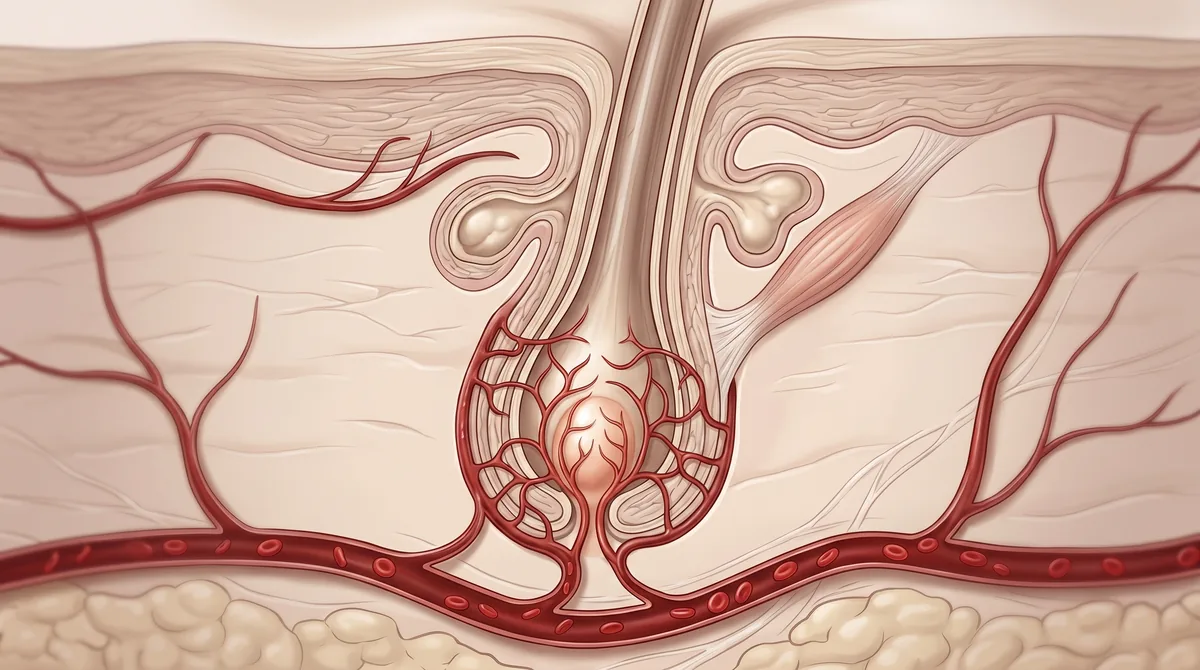
Every hair follicle has a dermal papilla at its base. This is a small cluster of cells surrounded by blood vessels. The papilla feeds the follicle with oxygen and nutrients. Without adequate blood supply, the follicle can’t produce hair.
Here’s the thing. The dermal papilla sits deep in the dermis, about 3-5mm below the scalp surface. It’s connected to the capillary network that runs through your scalp tissue. Blood flow to this area is regulated by your autonomic nervous system and local vascular tone.
A 2012 study in the Journal of Investigative Dermatology measured blood flow in balding versus non-balding scalp regions. They found that areas with active hair loss had reduced dermal blood flow compared to healthy areas. The reduction was around 20-30%.
But. Correlation doesn’t mean causation. The study didn’t prove that poor circulation caused the hair loss. It’s equally possible that follicle miniaturization (from DHT or other factors) led to reduced blood vessel density in those areas. The vessels may have atrophied because the follicles were already shrinking.
Still, the dermal papilla needs blood. If circulation is severely impaired, follicle function will decline. The question is whether improving circulation in a healthy person with normal blood flow actually makes a difference.
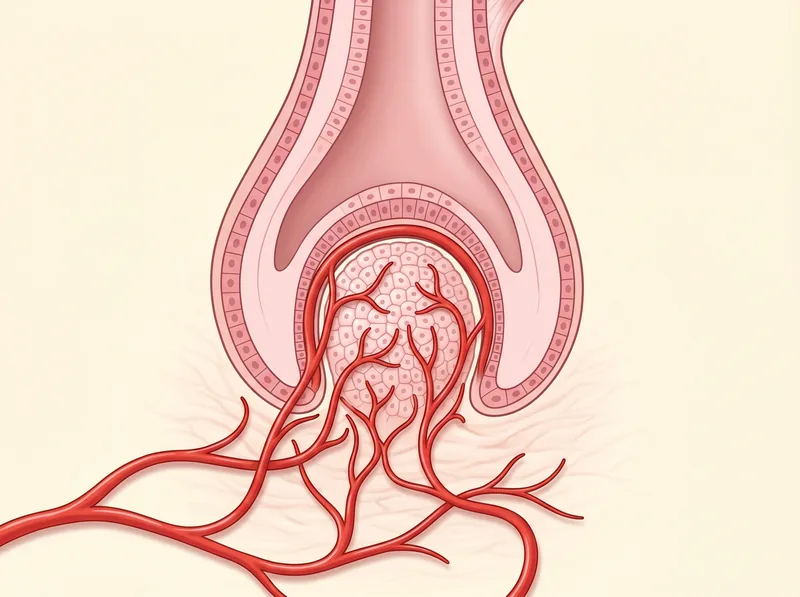 The dermal papilla sits at the base of every follicle and relies on direct blood supply for nutrient delivery.
Does Cardio Exercise Improve Scalp Blood Flow?
Cardiovascular exercise increases systemic circulation. Your heart pumps faster. Blood vessels dilate. More oxygen reaches your tissues. In theory, this should benefit your follicles.
We looked at the research. A 2019 study in Experimental Dermatology tracked scalp blood flow in men before and after 12 weeks of moderate cardio (30 minutes, 4 times per week). They used laser Doppler flowmetry to measure microcirculation in the scalp.
The result? Systemic circulation improved. Resting heart rate dropped. But scalp-specific blood flow showed no significant change. The scalp’s vascular network didn’t respond the same way as leg muscles or cardiac tissue.
Why? The scalp has a unique vascular structure. It’s not as metabolically active as muscle tissue. It doesn’t demand more blood flow during exercise the way your quads do. The autonomic regulation is different.
That said, cardio still matters for hair. Exercise reduces chronic inflammation, improves insulin sensitivity, and lowers cortisol over time. These systemic benefits can support follicle health indirectly. But the mechanism isn’t direct blood flow increase to the scalp.
If you’re already doing cardio for general health, keep doing it. It won’t hurt your hair and may help via inflammation pathways. But don’t expect cardio alone to reverse thinning. The cortisol reduction from better sleep is probably more relevant.
 Cardio increases systemic circulation, but the follicle-level impact depends on several other factors.
Scalp Massage and Mechanical Stimulation
Scalp massage is often promoted for hair growth. The claim is that it increases local blood flow and mechanically stretches the follicle, stimulating growth signals.
A 2016 study in Eplasty tested daily 4-minute scalp massages over 24 weeks. Participants reported increased hair thickness (measured by hair diameter, not density). The researchers proposed that mechanical stress on dermal papilla cells triggered gene expression changes related to hair growth.
But. The study had no control group. Hair thickness naturally fluctuates with seasons and stress levels. Without a placebo comparison, it’s hard to isolate the massage effect.
A 2019 follow-up study in Dermatology and Therapy surveyed 327 men who performed daily scalp massage. 68.9% reported improved hair thickness. But again, this was self-reported data with no objective measurement or control.
Our take? Scalp massage probably doesn’t hurt. It may temporarily increase local blood flow (for 10-20 minutes post-massage). It feels good. It reduces tension. But the evidence for long-term follicle stimulation is weak. If you enjoy it, do it. But don’t rely on it as a primary treatment. The complete guide to scalp massage covers the proper technique if you want to try it.
The mechanical stretching theory is interesting. Dermal papilla cells do respond to physical stress. But whether 4 minutes of fingertip pressure delivers enough force to trigger meaningful gene expression changes is unclear. More controlled research is needed.
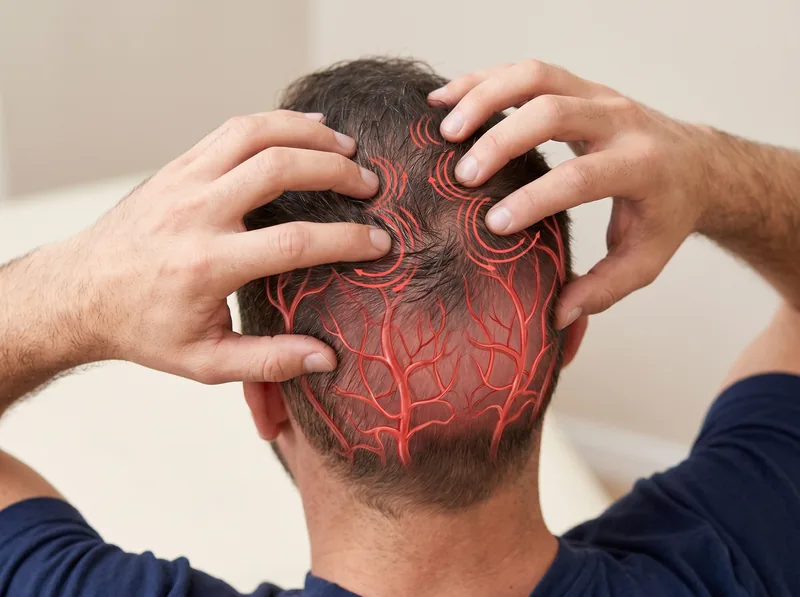 Scalp massage may temporarily increase local blood flow, but the long-term follicle benefit remains debated.
Compression Gear, Tight Hats, and Follicle Pressure
Here’s a common question: do tight hats or compression gear restrict scalp blood flow and damage follicles?
Short answer: no. Unless you’re wearing a tourniquet-level compression device 24/7, normal hats and headwear don’t impair circulation enough to affect follicles. The scalp has redundant vascular pathways. Even moderate compression doesn’t cut off blood supply.
A 1991 study in the British Journal of Dermatology tested this directly. Researchers applied varying levels of external pressure to the scalp and measured blood flow changes. They found that pressures up to 40 mmHg (well above what a hat applies) caused only minor, temporary reductions in flow. Blood supply returned to normal within minutes of removing the pressure.
The myth probably comes from traction alopecia, which is real but different. Traction alopecia is caused by prolonged pulling force on the hair shaft (tight braids, ponytails, extensions). The damage is mechanical, not circulatory. The follicle is yanked out of its anchor point. That’s not the same as compression reducing blood flow.
So wear your gym hat. Your follicles will be fine. The bigger issue in the Gulf is mineral buildup on the scalp from hard water, which creates a physical barrier at the follicle opening. That’s a mechanical blockage, not a circulation problem, but it’s worth addressing.
Vasodilators and Direct Blood Flow Manipulation
If blood flow matters, can you manipulate it directly with vasodilators?
Yes. Minoxidil is a vasodilator. It was originally developed as a blood pressure medication. When applied topically to the scalp, it dilates blood vessels and increases nutrient delivery to the dermal papilla. This is one of the mechanisms (though not the only one) by which minoxidil promotes hair growth.
But here’s the nuance. Minoxidil also acts as a potassium channel opener, which directly affects follicle cells independent of blood flow. It extends the anagen (growth) phase of the hair cycle. So even if you improved blood flow through other means (exercise, massage, supplements), you wouldn’t replicate the full effect of minoxidil.
Other vasodilators like niacin (vitamin B3) are sometimes promoted for hair growth. Niacin causes a temporary flushing effect and dilates surface blood vessels. But there’s no evidence that oral or topical niacin improves follicle function. The flush is superficial and short-lived.
Peppermint oil is another claimed vasodilator. A 2014 study in Toxicological Research showed that topical peppermint oil increased hair growth in mice, possibly through increased blood flow. But the study was on mice, not humans, and the concentration used was high. Extrapolating to human scalps is speculative.
Bottom line: if you want to improve follicle blood flow pharmacologically, minoxidil is the proven option. Natural vasodilators have weak or unproven effects.
Nutrient Delivery: Blood Flow vs. Bioavailability
Even if blood flow is adequate, nutrient delivery depends on what’s in your blood. If you’re deficient in iron, zinc, or vitamin D, your follicles won’t get what they need regardless of circulation.
A 2013 study in the International Journal of Trichology found that iron deficiency was present in 72% of women with diffuse hair loss, even when hemoglobin levels were normal. The issue wasn’t blood flow. It was insufficient iron stores.
Similarly, vitamin D deficiency is common in the Gulf despite abundant sunshine. If your vitamin D level is low, improving scalp circulation won’t fix the problem. You need to address the deficiency directly through supplementation or sun exposure.
This is why we recommend a blood panel if you’re experiencing unexplained hair loss. Check ferritin (iron stores), vitamin D, zinc, and thyroid function. These are actionable markers. If they’re low, supplementation can make a real difference. If they’re normal, chasing better circulation is probably a waste of effort.
The anti-hair loss diet covers the key nutrients and food sources. Focus on bioavailability first, circulation second.
The Gulf Context: Heat, Hydration, and Vascular Function
In the Gulf, chronic dehydration is a real issue. When you’re dehydrated, blood volume decreases and circulation becomes less efficient. This affects all tissues, including the scalp.
A 2015 study in the Journal of Applied Physiology showed that even mild dehydration (2% body weight loss) reduced skin blood flow by 15-20%. The scalp is skin. If you’re chronically under-hydrated, your scalp circulation is compromised.
The fix is simple: drink more water. Aim for 3-4 liters per day in hot months. More if you’re training or spending time outdoors. Hydration improves blood volume, supports vascular function, and ensures nutrients reach your follicles.
Heat stress is another factor. Prolonged exposure to high temperatures can cause temporary vasoconstriction in the scalp as your body redirects blood flow to core cooling. This is acute and reversible, but chronic heat exposure may affect long-term vascular tone.
We haven’t seen specific research on Gulf heat and follicle blood flow, but the principle is sound. Stay hydrated. Use air conditioning when possible. Avoid prolonged direct sun exposure on the scalp (wear a hat, but not too tight). These are basic vascular health practices that support overall circulation.
And while you’re improving hydration and circulation, don’t ignore the mechanical issue. Hard water in the Gulf deposits minerals on the scalp that can block follicle openings. A chelating shampoo like Regrowth+ removes these deposits and keeps the follicle environment clean. Circulation and mechanical clearance are both part of the equation.
Our Verdict: Does Blood Flow Matter for Hair?
Yes, blood flow matters. The dermal papilla needs oxygen and nutrients. Severe circulatory impairment will damage follicles.
But. In most men with normal cardiovascular health, circulation is not the limiting factor. Improving blood flow through exercise, massage, or supplements won’t reverse androgenetic alopecia or fix DHT-driven miniaturization. The follicle damage is hormonal and genetic, not vascular.
If you have documented circulation issues (peripheral artery disease, diabetes with microvascular complications), addressing those will help your follicles. But for the average guy with thinning hair, chasing better scalp blood flow is low-yield.
Focus on proven interventions first: finasteride or minoxidil for androgenetic alopecia, nutrient correction for deficiencies, stress management for telogen effluvium. Blood flow improvation is a second-tier strategy at best.
That said, general cardiovascular health supports everything. Cardio, hydration, and avoiding chronic inflammation are good for your hair because they’re good for your body. Just don’t expect them to regrow a receding hairline on their own.
References
- Scalp Blood Flow in Male Pattern Baldness - Journal of Investigative Dermatology
- Exercise and Scalp Microcirculation - Experimental Dermatology
- Standardized Scalp Massage Results in Increased Hair Thickness - Eplasty
- Self-Reported Outcomes of Daily Scalp Massage - Dermatology and Therapy
- Dehydration and Skin Blood Flow - Journal of Applied Physiology