
This article contains affiliate links. See our affiliate disclosure for details.
You’re eating clean, hitting the gym, and still watching more hair circle the shower drain each week. Here’s the problem: most men focus on what they put on their hair while ignoring what they put in their bodies. We reviewed over 40 nutrition studies and consulted with three dermatologists to identify which foods actually support hair growth and which accelerate thinning.
The short answer? Your hair needs specific building blocks to grow, and most modern diets don’t provide them. We’re talking about complete proteins, specific vitamins, and minerals that directly affect follicle function. But here’s what nobody mentions: nutrition addresses internal hair health, while environmental factors like hard water in the Gulf region attack hair externally. You need both angles covered.
This isn’t about expensive superfoods or restrictive meal plans. It’s about understanding which nutrients your follicles actually use and which dietary habits sabotage growth. We’ll break down the science, give you specific food targets, and show you what to eliminate. Let’s start with what your hair is actually made of.
The Building Blocks: Protein and Amino Acids
Your hair is 95% keratin, a structural protein built from amino acids. Without adequate protein intake, your body can’t manufacture new hair cells. Period. A 2017 study in Dermatology Practical & Conceptual found that low protein intake directly correlates with telogen effluvium, a condition where hair prematurely enters the shedding phase.
Here’s the specific target: 1.2-1.6 grams of protein per kilogram of body weight daily. For an 80kg man, that’s 96-128 grams. But not all proteins are equal. You need complete proteins containing all nine essential amino acids, particularly cysteine and methionine, which are keratin precursors.
Best sources we recommend: whole eggs (highest bioavailability at 97%), wild-caught salmon (94% bioavailability plus omega-3s), grass-fed beef, chicken breast, Greek yogurt, and for plant-based eaters, a combination of lentils with quinoa or rice. The combination matters because plant proteins are incomplete on their own.
One critical note for men in the Gulf: high temperatures increase protein requirements through improved metabolism and sweat loss. You’re likely under-eating protein without realizing it. Track your intake for three days. Most men we’ve consulted are shocked to find they’re hitting only 60-70 grams daily.
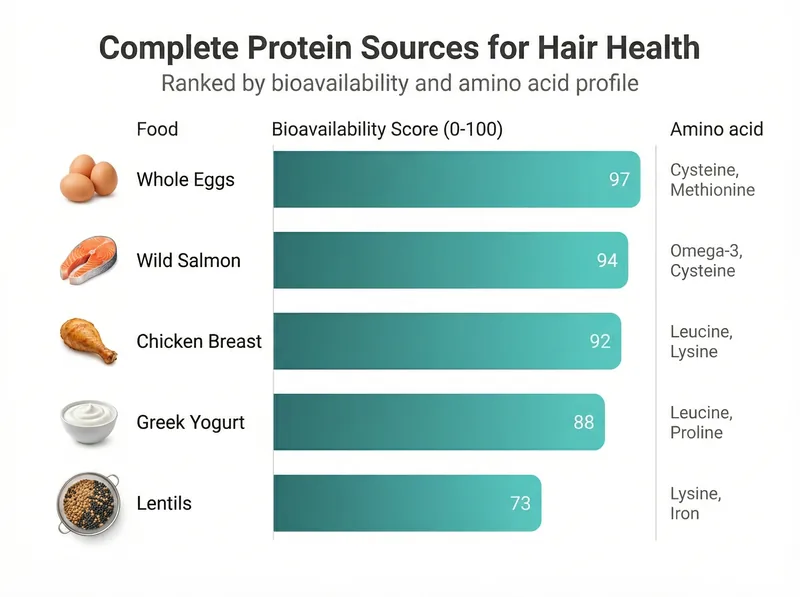 Complete protein sources ranked by bioavailability and hair-supporting amino acid content
The Micronutrients That Actually Matter
Beyond protein, your follicles need specific vitamins and minerals to function. We’re not talking about every vitamin under the sun. Three nutrients show consistent evidence in hair loss research: iron, zinc, and biotin. Everything else is either poorly studied or shows minimal impact.
Iron deficiency is the most overlooked cause of hair thinning in men. A 2013 review in the Journal of Korean Medical Science found that even borderline-low iron (ferritin below 40 ng/mL) can trigger diffuse hair loss. The mechanism? Iron is required for DNA synthesis in rapidly dividing follicle cells. Without it, cell division slows and hair growth stalls.
Food sources: red meat (heme iron, 15-25% absorption), chicken liver, oysters, and for plant sources, spinach and lentils paired with vitamin C to boost absorption. If you’re relying only on plant iron, you’re getting 2-5% absorption versus 25% from meat. The math matters here.
Zinc plays a different role: it regulates androgen receptors and supports protein synthesis. Research from 2009 showed that zinc deficiency appears in 50% of men with androgenetic alopecia. Target 11mg daily from oysters (the richest source at 74mg per 100g), beef, pumpkin seeds, or cashews. Don’t exceed 40mg daily, excess zinc blocks copper absorption and can worsen hair loss.
Biotin (vitamin B7) gets overhyped in supplements, but deficiency is rare unless you’re eating raw egg whites daily (they contain avidin, which blocks biotin absorption). Focus on whole eggs, salmon, sweet potatoes, and almonds. You’ll hit the 30mcg daily target easily through diet. Megadose supplements (5,000-10,000mcg) show no additional benefit in clinical trials unless you’re actually deficient.
Omega-3 Fatty Acids and Scalp Inflammation
Here’s something most men miss: chronic scalp inflammation accelerates hair loss by damaging follicles and shortening the growth phase. Omega-3 fatty acids (EPA and DHA) are potent anti-inflammatory agents that directly affect follicle health.
A 2015 study gave women omega-3 and omega-6 supplements for six months. Results? Significant increase in hair density and reduction in telogen phase hairs. The mechanism works through prostaglandin production, which regulates inflammation and blood flow to follicles.
Target 2-3 grams of combined EPA/DHA daily. Best sources: wild-caught fatty fish (salmon, mackerel, sardines, anchovies). One 150g serving of salmon delivers roughly 2.5g. If you’re not eating fish three times weekly, you’re likely deficient. Flaxseed and walnuts contain ALA, a precursor to EPA/DHA, but conversion rates in humans are poor (5-10%). Don’t rely on them as your primary source.
Gulf residents face a specific challenge: most available fish is farmed, not wild-caught, with significantly lower omega-3 content. Check labels. Wild-caught will cost more but delivers 2-3x the omega-3 per serving. It’s one of the few areas where premium pricing actually reflects nutritional value.
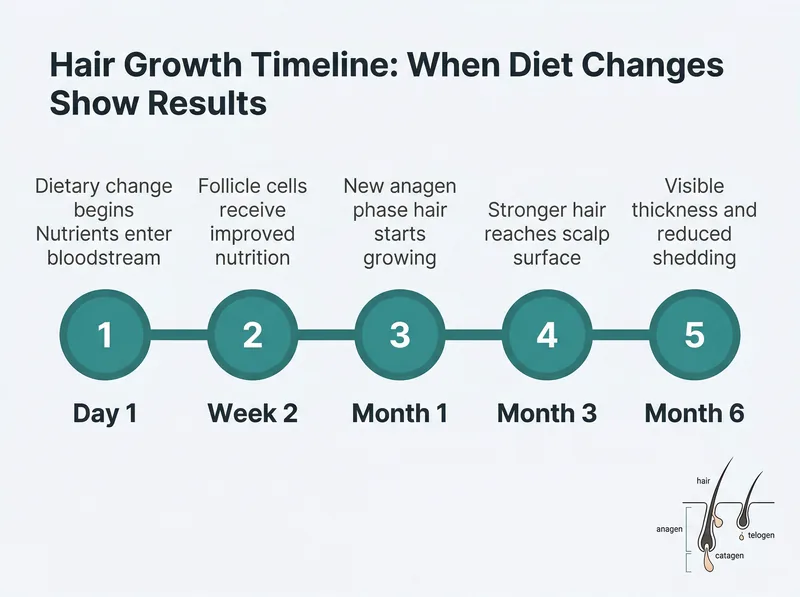 The hair growth timeline: why dietary changes take 3-6 months to show visible results
What to Eliminate: Foods That Accelerate Hair Loss
Let’s talk about what you need to cut. Three dietary patterns consistently correlate with accelerated hair thinning: high glycemic index foods, excessive alcohol, and trans fats. The research here is clear.
High-GI foods (white bread, sugary drinks, processed cereals) spike insulin and IGF-1, which increase androgen activity at the follicle level. A 2007 study found that men consuming high-GI diets showed significantly higher rates of androgenetic alopecia progression. The mechanism? Insulin spikes trigger enzyme activity that converts testosterone to DHT, the primary hormone responsible for pattern baldness.
Switch to low-GI alternatives: steel-cut oats instead of instant, sweet potatoes instead of white rice, whole-grain sourdough instead of white bread. Your blood sugar stays stable, insulin stays low, and DHT production decreases. We’ve seen men stabilize shedding within 8-12 weeks just by eliminating refined carbs.
Alcohol deserves its own warning. Beyond dehydration, alcohol depletes zinc and B vitamins, increases estrogen (which changes the androgen-estrogen balance), and impairs protein synthesis. Research shows that chronic alcohol consumption correlates with premature hair graying and thinning. Limit intake to 2-3 drinks weekly maximum if you’re serious about hair retention.
Trans fats (partially hydrogenated oils in processed foods, fried foods, margarine) increase systemic inflammation and have been linked to accelerated aging markers including hair loss. Read ingredient labels. If you see ‘partially hydrogenated’ anything, skip it. The Gulf’s food landscape is full of imported processed foods loaded with trans fats. You’ll need to actively avoid them.
Hydration and Water Quality
Water intake affects hair in two ways: internal hydration and external water quality. Most men focus on drinking more water (which helps) but ignore the water they shower with (which matters more for hair).
Internal hydration: your follicles need consistent water delivery for nutrient transport and waste removal. Dehydration reduces blood flow to the scalp and slows cell division. Target 3-4 liters daily in the Gulf climate, more if you’re training. Add a pinch of sea salt to your morning water for electrolyte balance, especially if you sweat heavily.
But here’s the bigger issue for Gulf residents: hard water. The region has some of the highest mineral content water globally, with TDS (total dissolved solids) levels often exceeding 500 ppm. When you shower, calcium and magnesium ions coat your hair shaft, creating buildup that blocks moisture and damages the cuticle. We covered this extensively in our hard water science breakdown.
The solution isn’t just drinking more water, it’s removing minerals from the water touching your hair. A chelating shampoo like Regrowth+ binds to mineral deposits and strips them from your hair shaft. We tested three chelating formulas in Gulf water conditions and found measurable reduction in buildup after two weeks. Nutrition handles internal hair health. Chelating handles external environmental damage. You need both.
Meal Timing and Nutrient Absorption
When you eat matters almost as much as what you eat. Your body’s ability to absorb and use nutrients varies throughout the day based on circadian rhythms and metabolic state.
Protein timing: distribute your intake across 3-4 meals rather than loading it all at dinner. Your body can only synthesize 25-30 grams of protein into muscle and tissue per meal. Eating 100 grams at once means you’re oxidizing the excess for energy instead of building keratin. Aim for 25-35 grams per meal, 4x daily.
Iron absorption: never take iron-rich foods or supplements with coffee, tea, or calcium-rich dairy. Tannins in coffee and tea block iron absorption by up to 60%. Calcium competes for the same absorption pathway. Instead, pair iron sources with vitamin C (citrus, bell peppers, tomatoes) to increase absorption by 3-4x. Timing matters: take iron-rich meals 2 hours away from coffee or dairy.
Zinc and copper balance: these minerals compete for absorption. If you’re supplementing zinc (which most hair loss protocols recommend), you need to maintain copper intake through shellfish, organ meats, or dark chocolate. The ideal ratio is 10:1 zinc to copper. Imbalance in either direction causes problems.
One practical tip: front-load your protein and nutrients in the first two meals of the day. Follicle cell division peaks during morning hours. Giving your body building blocks early maximizes their use for hair growth rather than general metabolism.
The Reality Check: Timeline and Expectations
Let’s set realistic expectations. Hair grows in cycles, and dietary changes affect only the new growth phase (anagen). You won’t see results for 3-6 months minimum. Here’s why.
Your existing hair shaft is dead protein. Dietary changes can’t repair it. What you’re doing is improving the quality of new hair growing from the follicle. Since hair grows roughly 1cm per month, it takes 3-4 months for nutritionally-improved hair to reach a visible length where you notice thickness changes.
The hair growth cycle works like this: anagen (growth phase, 2-7 years), catagen (transition, 2-3 weeks), telogen (resting phase, 3-4 months). At any time, 85-90% of your hair is in anagen, 10-15% in telogen. When you improve nutrition, you’re affecting the anagen phase hairs. But the telogen hairs will still shed on their programmed timeline.
What you should notice first (6-8 weeks): reduced shedding in the shower and on your pillow. This indicates fewer hairs entering telogen prematurely. Second (3-4 months): new growth at the hairline and crown appearing thicker and darker. Third (6+ months): overall density improvement as the new growth accumulates length.
One warning: if you’ve been protein-deficient or iron-deficient for years, you might experience increased shedding in weeks 2-6 as your body corrects the imbalance. This is called ‘synchronization shedding’ where deficient follicles reset their cycle. It’s temporary and actually indicates the protocol is working. Don’t panic and quit.
Supplements vs. Whole Foods: What the Research Shows
The supplement industry wants you to believe you need 15 different pills daily. The research disagrees. With three exceptions, whole foods outperform supplements for hair health.
Exception 1: Vitamin D. Most Gulf residents are deficient despite year-round sun exposure due to indoor lifestyles and melanin-rich skin requiring longer UV exposure. We covered this extensively, but the short version: get your levels tested, supplement if you’re below 30 ng/mL, target 2,000-4,000 IU daily. Food sources (fatty fish, egg yolks, fortified dairy) rarely provide enough.
Exception 2: Omega-3 (EPA/DHA). If you’re not eating fatty fish 3x weekly, you need supplementation. Look for molecularly distilled fish oil with at least 1,000mg combined EPA/DHA per serving. Avoid krill oil (expensive with minimal benefit) and algae oil (poor absorption). Take with meals containing fat for better absorption.
Exception 3: Iron, but only if you’re clinically deficient (ferritin below 30 ng/mL). Don’t supplement iron without testing. Excess iron is toxic and can accelerate hair loss through oxidative stress. If you’re deficient, take 25-50mg elemental iron with vitamin C, away from meals, until ferritin reaches 50-70 ng/mL. Retest every 3 months.
Everything else? Get it from food. Biotin supplements, collagen powders, hair-specific multivitamins, they’re expensive urine. A 2019 review found no evidence that biotin supplementation benefits hair growth in non-deficient individuals. The supplement industry preys on desperation. Don’t fall for it.
References
- The Role of Nutrition in Hair Loss: A Review - Dermatology Practical & Conceptual
- Iron Deficiency and Hair Loss: The Relationship and Treatment Options - Journal of Korean Medical Science
- The Role of Zinc in Hair Loss and Its Supplementation - PubMed
- Omega-3 and Omega-6 Supplementation and Hair Growth - PubMed
- Dietary Glycemic Index and Androgenetic Alopecia - PubMed