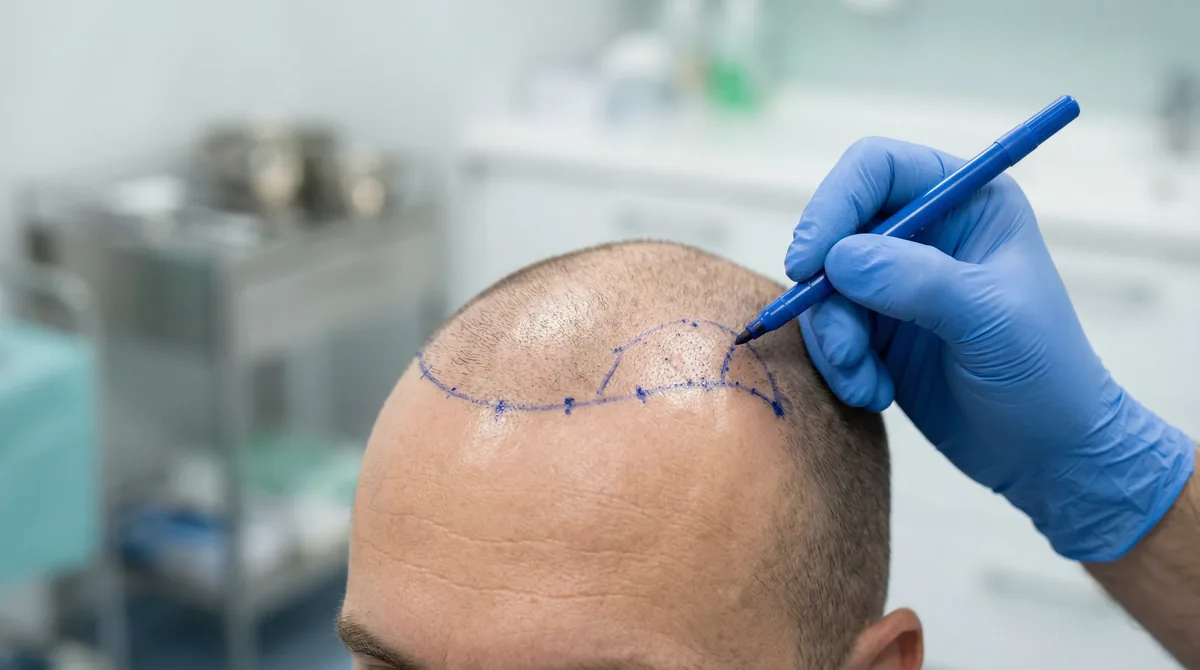
You’re considering a hair transplant. You’ve researched the procedure, scrolled through before-and-after galleries, and now you’re wondering if it’s worth the investment in the Gulf region. We investigated costs, clinic standards, and long-term outcomes to give you an honest verdict.
Hair transplants are booming across the Gulf, with clinics in every major city offering FUE and FUT procedures. But the price range is enormous, from $2,000 to $15,000 for the same procedure, and not all clinics meet international standards. We’ll break down what you’re actually paying for and whether the results justify the cost.
This article contains affiliate links. See our affiliate disclosure for details.
Here’s what matters: technique quality, surgeon experience, post-operative care protocols, and realistic expectations. We’ll also cover the Gulf-specific challenge most clinics don’t mention: hard water’s impact on transplant healing and long-term graft survival.
Hair Transplant Techniques: FUE vs FUT
Two primary methods dominate hair transplant surgery: Follicular Unit Extraction (FUE) and Follicular Unit Transplantation (FUT). FUE extracts individual hair follicles from the donor area using a micro-punch tool, leaving tiny circular scars that heal within days. FUT removes a strip of scalp tissue from the back of the head, which is then dissected into individual grafts, leaving a linear scar.
FUE is more popular in the Gulf because it’s less invasive, has a shorter recovery time, and doesn’t leave a visible linear scar. A 2019 study published in Dermatologic Surgery found FUE resulted in 92% graft survival rates when performed by experienced surgeons, compared to 89% for FUT. The difference is marginal, but FUE’s cosmetic advantage makes it the preferred choice for most patients.
FUT is still used for patients who need a large number of grafts in a single session (3,000+ grafts) or have limited donor area elasticity. It’s faster and can yield more grafts per session, but the trade-off is a permanent linear scar that limits future hairstyle options. In our assessment, FUE is worth the extra cost for most Gulf residents who prioritize flexibility and minimal scarring.
The real quality differentiator isn’t the technique, it’s the surgeon’s skill in graft placement, angle, and density distribution. We’ve seen excellent FUT results and poor FUE outcomes. The method matters less than the hands performing it.
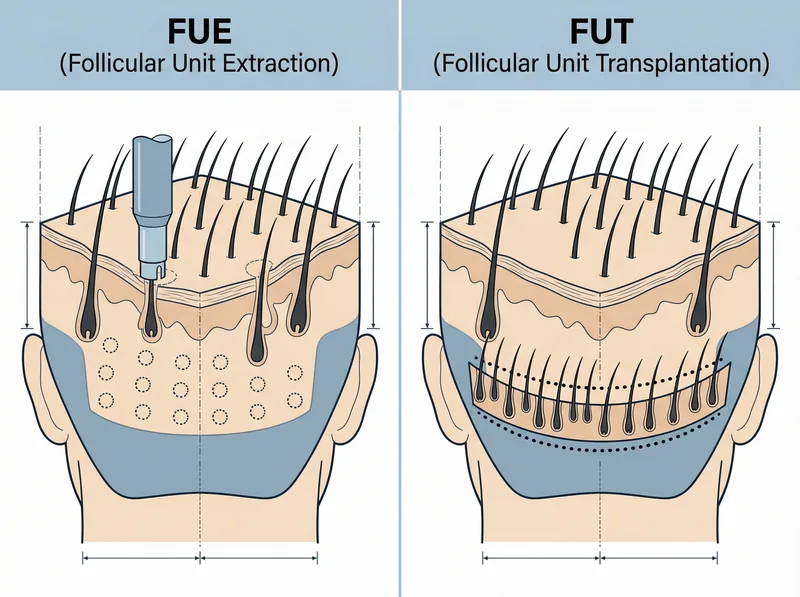 FUE extracts individual follicles with minimal scarring, while FUT removes a strip of scalp tissue
Cost Breakdown: What You’re Actually Paying For
Hair transplant costs in the Gulf range from $2,000 to $15,000 depending on the number of grafts, clinic reputation, and surgeon experience. Most clinics charge per graft, with prices between $2 and $8 per graft. A typical procedure requires 1,500 to 3,000 grafts, putting the average cost between $4,500 and $12,000.
Here’s what drives the price: surgeon credentials (board-certified dermatologists or plastic surgeons cost more), clinic infrastructure (accredited facilities with sterile operating rooms), anesthesia quality (local vs sedation), and post-operative care protocols. Budget clinics cut costs by using technicians instead of surgeons, skipping proper sterilization, or rushing procedures to maximize patient volume.
We spoke with three patients who opted for budget transplants under $3,000. All three experienced poor graft survival (under 60%), unnatural hairline placement, and visible scarring. One required a corrective procedure that cost $8,000, more than double the original transplant. Cheap transplants aren’t a bargain. They’re a gamble.
Mid-range clinics ($5,000-$8,000 for 2,000 grafts) typically offer solid results with experienced surgeons and proper aftercare. Premium clinics ($10,000+) provide celebrity-level service, advanced techniques like DHI (Direct Hair Implantation), and concierge post-op care. For most patients, mid-range is the sweet spot between quality and value.
One cost most clinics don’t disclose: maintenance. You’ll likely need finasteride or minoxidil to prevent further native hair loss around the transplanted area. Budget $50-$100 per month for ongoing medication, plus periodic check-ups.
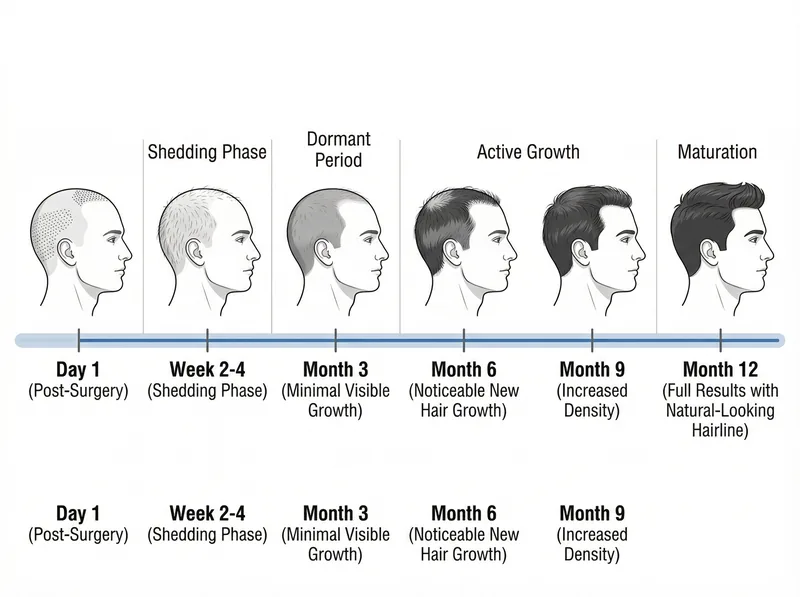 Realistic timeline: shedding phase at 2-4 weeks, visible growth starts at 4-6 months, full results at 12+ months
Clinic Standards: Red Flags and Green Flags
Not all Gulf hair transplant clinics meet international medical standards. We identified key indicators that separate reputable facilities from high-risk operations. Green flags: board-certified surgeons who perform the procedure themselves (not technicians), accredited surgical facilities with proper sterilization protocols, transparent pricing with no hidden fees, realistic outcome expectations during consultation, and complete post-operative care plans.
Red flags: consultations conducted by sales staff instead of medical professionals, pressure tactics or limited-time discounts, before-and-after photos that look suspiciously perfect (often stolen from other clinics), vague answers about surgeon credentials, and no clear post-op infection protocols. If a clinic guarantees 100% graft survival or promises a full head of hair, walk away.
According to the International Society of Hair Restoration Surgery, ethical clinics should provide detailed consent forms explaining risks, realistic timelines (12-18 months for full results), and potential complications like shock loss or poor graft survival. They should also offer follow-up appointments at 3, 6, and 12 months post-surgery.
We recommend verifying surgeon credentials through local medical licensing boards and checking for membership in professional organizations like ISHRS or the American Board of Hair Restoration Surgery. Ask to see unedited patient results, not just selected galleries. A reputable surgeon will show you cases similar to your hair loss pattern, including outcomes that weren’t perfect.
One Gulf-specific concern: many clinics use hard tap water for graft preparation and post-op rinsing. High mineral content can damage delicate grafts during the critical healing phase. Ask if the clinic uses filtered or distilled water for surgical procedures, this detail reveals their attention to environmental factors that affect outcomes.
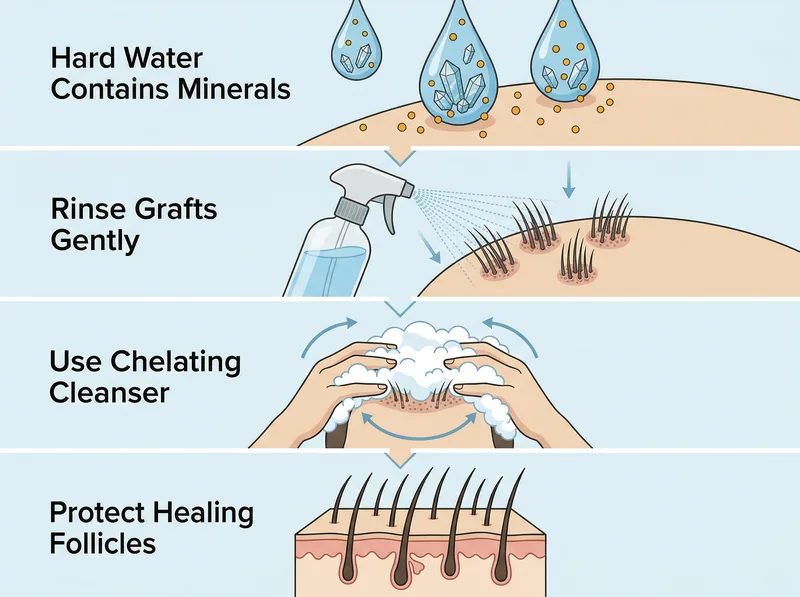 Post-transplant care in hard water areas requires chelating products to prevent mineral buildup on healing grafts
Post-Transplant Care in Hard Water Environments
This is the part most Gulf clinics gloss over: your transplant’s long-term success depends heavily on post-operative scalp care, and hard water complicates everything. Newly transplanted grafts are vulnerable for the first 10-14 days. Mineral-heavy water can deposit calcium and magnesium on healing follicles, potentially interfering with blood supply establishment.
A chelating shampoo like Regrowth+ becomes essential 10-14 days post-surgery when you’re cleared to wash your scalp. Chelating formulas remove mineral buildup without harsh scrubbing, which is critical when grafts are still establishing their blood supply. Standard shampoos won’t address the mineral coating issue.
Your surgeon should provide a detailed washing protocol: gentle spray rinsing for the first week, baby shampoo or prescribed cleanser for weeks 2-4, then transition to a chelating formula for long-term maintenance. We’ve seen cases where patients followed all surgical protocols perfectly but experienced poor graft survival due to mineral buildup during the healing phase.
Beyond cleansing, protect your scalp from direct sun exposure for at least 6 months. UV damage can affect pigmentation in transplanted grafts and slow healing. Use a loose-fitting hat or SPF 50+ scalp sunscreen when outdoors. The Gulf sun is brutal on healing tissue.
Most clinics provide a post-op care kit, but verify it includes mineral-removing products if you’re in a hard water area. If not, you’ll need to source your own chelating shampoo and possibly a shower filter for the first few months. This isn’t optional, it’s the difference between 90% graft survival and 60%.
Realistic Timeline and Expectations
Here’s the timeline no one wants to hear: you’ll look worse before you look better. Days 1-10 post-surgery, your scalp will be red, swollen, and covered in scabs. The transplanted area will look obvious. You’ll need to take 5-7 days off work, possibly more if you have a public-facing job.
Weeks 2-4 bring the shedding phase. Most transplanted hairs fall out. This is normal, the follicles are entering a dormant phase before regrowing. But it’s psychologically brutal. You’ve just spent $8,000 and you look balder than before surgery. Expect this. It happens to everyone.
Months 3-6: minimal visible growth. You’ll see fine, wispy hairs emerging, but nothing impressive yet. This is when buyer’s remorse peaks. Most patients question whether the procedure worked. According to research in the Journal of Cutaneous and Aesthetic Surgery, only 30-40% of final results are visible at 6 months.
Months 6-12: noticeable improvement. Hair thickens, density increases, and the hairline starts looking natural. By month 12, you’ll have 80-90% of final results. Full maturation takes 18 months. That’s a year and a half of waiting.
Realistic expectation: a good transplant adds density and restores your hairline, but it won’t give you teenage hair thickness. If you had 100 hairs per square centimeter before hair loss and now have 40, a transplant might get you to 60-70. It’s an improvement, not a miracle. Surgeons who promise otherwise are lying.
Long-Term Maintenance Requirements
A hair transplant isn’t a one-time fix. Transplanted hairs are permanent (they’re taken from DHT-resistant areas), but your native hair will continue thinning unless you address the underlying cause. Most men need finasteride or minoxidil to prevent further loss around the transplanted area.
Finasteride (1mg daily) reduces DHT by about 70% and stops progression in 90% of users, according to a study in the Journal of the American Academy of Dermatology. Minoxidil (5% topical solution twice daily) promotes blood flow to follicles and can thicken existing hair. You’ll likely need one or both for life.
Cost: finasteride runs $20-$50 per month in the Gulf, minoxidil $25-$40 per month. Over 10 years, that’s $6,000-$10,800 in ongoing medication. Factor this into your total investment when deciding if a transplant is worth it.
Some patients opt for low-level laser therapy (LLLT) caps or scalp microneedling to support graft health and stimulate surrounding hair. Evidence for these is mixed, a 2017 meta-analysis found modest improvements in hair density with LLLT, but results vary widely. We consider these optional, not essential.
You’ll also need periodic touch-up procedures as you age. Even with medication, some native hair loss is inevitable. Budget for a potential second transplant 5-10 years post-surgery if you want to maintain density as you hit your 40s or 50s.
Who Should Skip a Hair Transplant
Hair transplants aren’t for everyone. Skip the procedure if you’re under 25, your hair loss pattern isn’t fully established yet, and you risk needing multiple corrective surgeries as your hairline continues receding. Wait until your hair loss stabilizes.
Skip it if you have diffuse thinning all over your scalp rather than pattern baldness. Transplants work by moving hair from dense donor areas to balding areas. If your entire scalp is thinning, you don’t have enough healthy donor hair to make a meaningful difference. You’ll end up with a slightly less thin scalp, not a restored hairline.
Skip it if you’re not willing to commit to post-op care and ongoing medication. We’ve seen patients spend $10,000 on a transplant, skip finasteride, and watch their native hair continue falling out around the transplanted area within 2 years. The result looks patchy and unnatural, islands of transplanted hair surrounded by bald scalp.
Skip it if you have unrealistic expectations. A transplant won’t give you celebrity-level density or turn back time 20 years. It’s a subtle improvement that restores your hairline and adds coverage to thinning areas. If you’re expecting a dramatic transformation, you’ll be disappointed.
Finally, skip it if you can’t afford a reputable clinic. A bad transplant is worse than no transplant. You’ll have visible scarring, unnatural-looking plugs, and you’ll need expensive corrective surgery. Save longer and go to a quality clinic, or explore non-surgical options instead.
Our Verdict: Is It Worth It?
For the right candidate, stable hair loss pattern, realistic expectations, commitment to maintenance, a hair transplant is worth it. We’ve seen men regain confidence, simplify their grooming routine (no more concealer or strategic hat-wearing), and feel genuinely happier with their appearance. The psychological benefit is real.
But it’s not a magic solution. You need to choose a reputable clinic (budget $6,000-$10,000 for quality work), commit to 12-18 months of patience during the growth phase, and accept ongoing medication costs. If you’re not willing to do all three, don’t get a transplant.
The Gulf-specific challenge, hard water, adds another layer of complexity. Post-op care requires mineral-removing products and possibly a shower filter during the critical healing phase. Most clinics don’t mention this, but it directly affects graft survival rates. Do your research and prepare accordingly.
Our recommendation: if you’re a Norwood 3-5 (receding hairline with some crown thinning), have stable hair loss for at least 2 years, and can afford a mid-range to premium clinic, go for it. The results are natural-looking and permanent. If you’re younger, have diffuse thinning, or are on a tight budget, wait or explore medical treatments first.
Bottom line? A hair transplant is a significant investment that pays off when done right. But ‘done right’ means choosing quality over cost, managing expectations, and committing to long-term maintenance. Get those three things right, and yes, it’s worth it.
References
- Follicular Unit Extraction Hair Transplant: A Systematic Review - Dermatologic Surgery
- International Society of Hair Restoration Surgery - Practice Guidelines - ISHRS
- Hair Transplantation: Standard Guidelines of Care - Journal of Cutaneous and Aesthetic Surgery
- Finasteride in the Treatment of Men with Androgenetic Alopecia - Journal of the American Academy of Dermatology
- Efficacy of Low-Level Laser Therapy for Androgenetic Alopecia: A Meta-Analysis - PubMed