This article contains affiliate links. See our affiliate disclosure for details.
You walked out of the clinic with a new beard outline. Now the real work starts. The first 30 days after a beard transplant determine whether those grafts survive or fall out. The difference between a full beard and patchy failure comes down to how you handle this month.
We’ve compiled a day-by-day aftercare protocol based on clinical guidelines for facial hair transplantation and adjusted it for Gulf conditions. Hard water, heat, and humidity all affect healing. Here’s what to do, and what to avoid, from Day 1 through Day 30.
The Five Phases of Beard Transplant Recovery
Beard transplant recovery isn’t linear. It moves through five distinct phases, each with different risks and care requirements. Understanding which phase you’re in prevents mistakes.
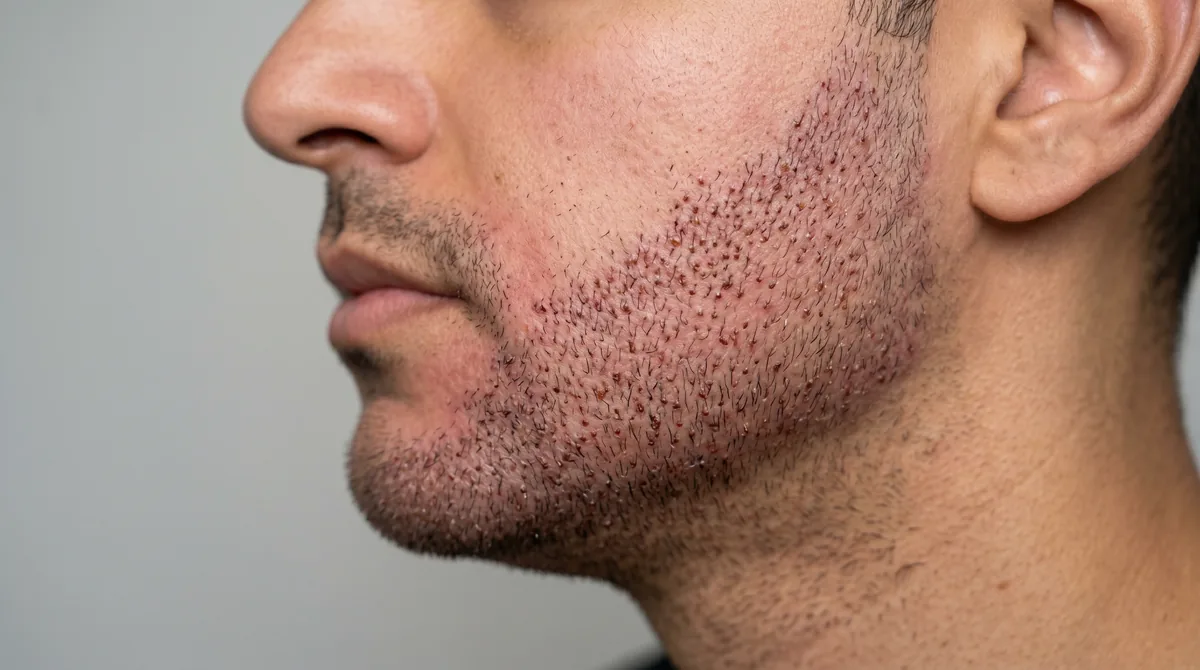
Phase 1: Acute Healing (Days 1-7). The grafts are fragile. Blood supply hasn’t established yet. Swelling peaks around Day 3. Any trauma, rubbing, scratching, pressure, can dislodge grafts permanently. Your job is to protect them.
Phase 2: Scab Formation and Shedding (Days 8-14). Small crusts form around each graft. They’ll fall off naturally. Don’t pick them. The transplanted hairs will shed during this phase, that’s normal and expected. The follicles stay behind.
Phase 3: Dormancy (Days 15-90). The follicles go dormant. You’ll see almost no hair growth. This is the longest phase and the most psychologically difficult. Nothing you do during this phase speeds it up. The follicles are resetting their growth cycle.
Phase 4: New Growth (Days 91-120). New hairs emerge. They’re fine and soft at first, like vellus hair. Growth is uneven, some areas wake up before others. This phase requires patience. The beard won’t look full yet.
Phase 5: Maturation (Days 121-180). The hairs thicken and darken. Density improves. By six months, you’ll see the final shape. Full density takes 12-18 months, but the critical aftercare window is the first 30 days.
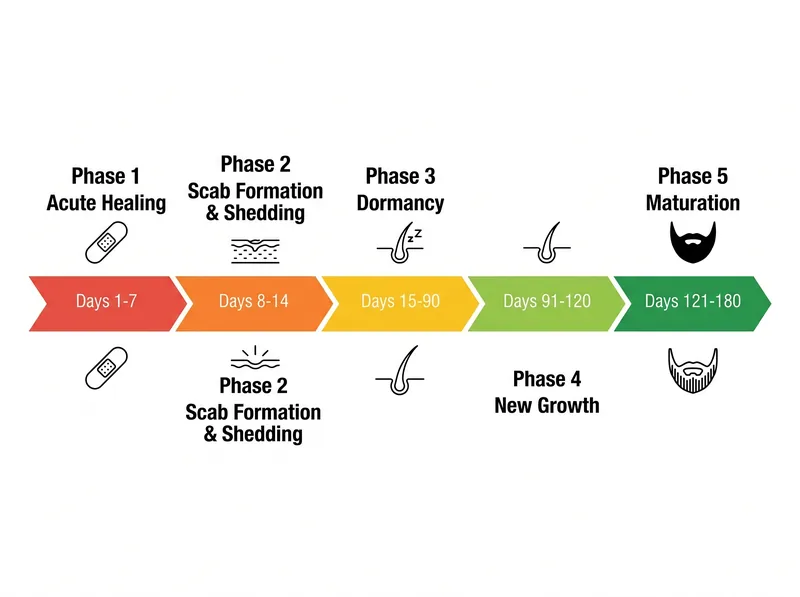 The five distinct phases of beard transplant recovery, from initial healing through final density.
Days 1-7: The Critical Week
Day 1. You’ll leave the clinic with bandages or a light dressing. Don’t remove it until instructed. Swelling starts within hours. Sleep improved, two pillows minimum, to reduce facial swelling. Don’t lie face-down. The grafts are held in place by clotted blood, not established roots. Any pressure can shift them.
Take prescribed antibiotics and anti-inflammatories on schedule. Don’t skip doses. Infection risk is highest in the first 48 hours. Avoid alcohol, it thins blood and increases swelling.
Days 2-3. Swelling peaks. Your face will look puffy, especially around the cheeks and jawline. That’s normal. Ice packs help, but don’t apply them directly to the graft area. Wrap ice in a towel and hold it near the grafts, not on them.
Don’t wash the beard area yet. Most clinics recommend waiting 48-72 hours before the first wash. Follow your surgeon’s specific timeline. When you do wash, use lukewarm water and a gentle, sulfate-free cleanser. In hard water areas, a chelating shampoo like Regrowth+ prevents mineral buildup on healing grafts.
Days 4-7. The grafts are still fragile, but the immediate dislodgement risk drops after Day 5. Small scabs form around each graft. Don’t pick them. Let them fall off naturally during washing. Itching starts, this is a healing sign, not a problem. Don’t scratch. Pat the area gently if needed.
You can return to light work, but avoid heavy lifting, bending over, or anything that increases facial blood pressure. No gym, no sauna, no steam room. Heat dilates blood vessels and increases swelling. The Gulf climate already adds heat stress, stay in air conditioning when possible.
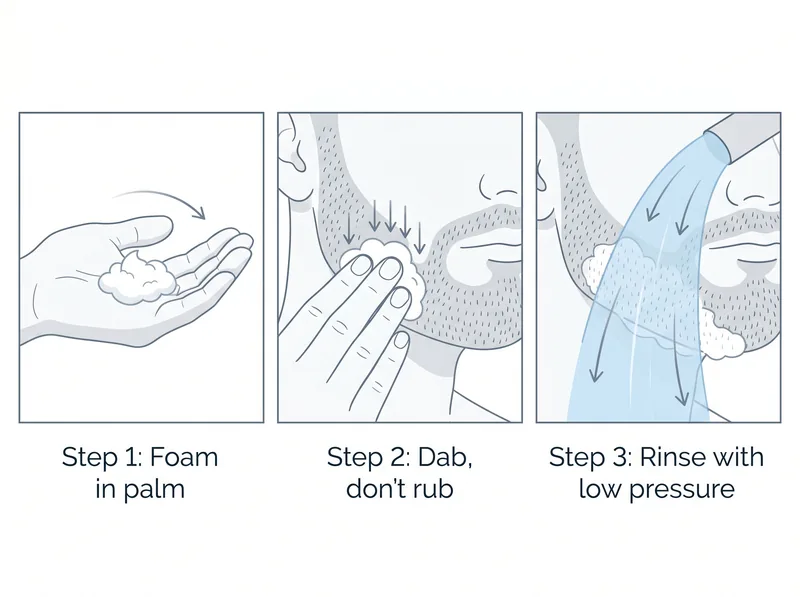 The correct washing technique to protect grafts while removing mineral buildup.
Days 8-14: Scab Shedding and Hair Loss
The scabs will start falling off during washing. This is normal. Underneath, the skin will be pink and slightly raised. Don’t scrub to remove scabs faster, they’ll come off when ready. Aggressive washing can damage the follicles underneath.
The transplanted hairs will shed. This is called shock loss, and it happens to nearly everyone. The hair shaft falls out, but the follicle stays rooted. The follicle is what matters. New hairs will grow from those follicles in 3-4 months.
By Day 10, you can wash daily. Use gentle pressure. Foam the cleanser in your hands first, then dab it onto the beard area. Don’t rub. Rinse with low water pressure, a strong shower stream can still irritate healing skin.
You can shave the non-transplanted areas of your face, but don’t shave the transplant zone for at least 3-4 weeks. Even after that, use an electric trimmer on the longest guard setting. No blade shaving until Month 3.
Avoid direct sun exposure. UV radiation damages healing skin and can cause hyperpigmentation in the graft area. If you must go outside, wear a wide-brimmed hat or apply a mineral-based SPF 30+ sunscreen to the surrounding skin, not directly on the grafts until Day 14.
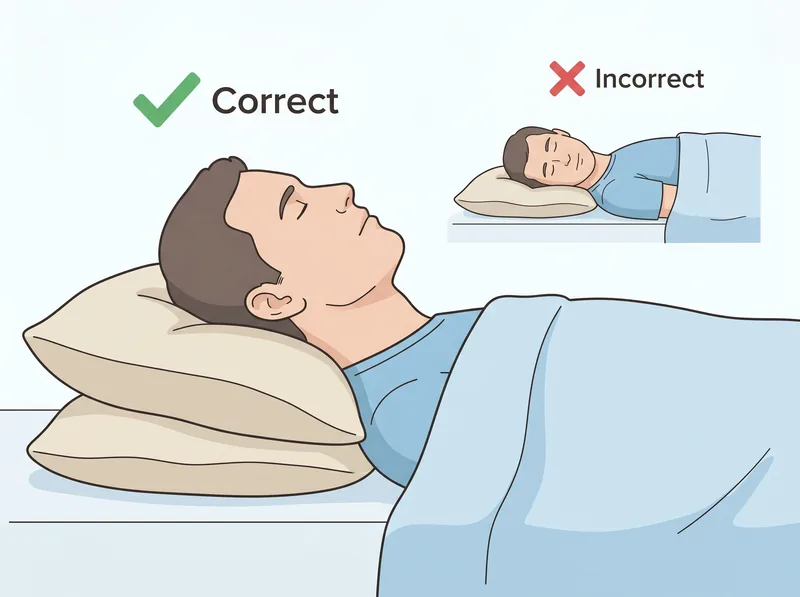 Proper sleeping position for the first week to minimize facial swelling.
Days 15-30: Entering Dormancy
By Day 15, the grafts are anchored. The risk of dislodgement is minimal. The transplanted hairs are mostly gone. The skin looks smooth, with small follicle openings visible. This is normal. The follicles are dormant, not dead.
You can resume normal washing. The grafts can handle regular water pressure now. In hard water areas, continue using a chelating cleanser to prevent mineral deposits from clogging follicle openings. Hard water leaves calcium and magnesium residue that can interfere with the next growth phase.
Light exercise is safe after Day 14. Cardio, light weights, stretching, all fine. Avoid contact sports or anything that risks a blow to the face. No boxing, no martial arts, no aggressive ball sports. A direct hit can still damage follicles during the first month.
You can trim the non-transplanted beard areas with clippers. Use a guard, don’t go down to skin level yet. The transplant zone should be left untouched. Even if you see a few hairs poking through, don’t trim them. Let them grow undisturbed until Month 3.
Sleep position matters less now, but staying improved still reduces morning puffiness. Some men experience prolonged mild swelling through Week 3. That’s within normal range. If swelling increases suddenly or you see redness spreading, contact your clinic, that’s a potential infection sign.
By Day 30, the acute healing phase is over. The grafts are secure. The follicles are dormant. The next 60 days will feel like nothing is happening. That’s the hardest part psychologically, but it’s a necessary biological process. The follicles are resetting. New growth will start around Month 3.
What to Avoid During the First 30 Days
These are the common mistakes that damage grafts or delay healing. Avoid them completely.
Alcohol and smoking. Alcohol thins blood and increases swelling. Smoking constricts blood vessels and reduces oxygen delivery to healing grafts. Studies show smokers have higher graft failure rates after hair transplants. If you smoke, quit for at least the first month. Ideally, quit permanently.
Direct sun exposure. UV radiation damages healing skin and can cause permanent pigmentation changes. The transplant area is especially vulnerable during the first two weeks. Stay out of direct sun. If you must be outside, wear a hat or use mineral sunscreen after Day 14.
Swimming pools and seawater. Chlorine and salt are irritants. They dry out healing skin and can introduce bacteria. No swimming for at least 4 weeks. Some clinics recommend waiting 6 weeks. The Gulf’s warm seawater is especially risky, it’s a bacterial breeding ground.
Saunas, steam rooms, and hot showers. Heat increases blood flow and swelling. It also opens pores, which can introduce bacteria to healing follicles. Keep showers lukewarm. Avoid saunas and steam rooms for the full first month. The Gulf climate already adds heat stress, don’t compound it.
Touching, scratching, or picking. Your hands carry bacteria. Scratching can dislodge grafts or damage follicles. Picking scabs removes them before the skin underneath is ready, which increases scarring risk. Keep your hands off your face.
Tight clothing or helmets. Anything that presses against the beard area can damage grafts. No motorcycle helmets, no tight scarves, no face masks that compress the transplant zone. If you must wear a mask for work, use a loose-fitting surgical mask, not a tight N95.
Hard Water and Mineral Buildup
If you live in the Gulf, your tap water likely has a TDS (total dissolved solids) reading above 300 ppm. That’s considered hard to very hard. High mineral content affects healing skin the same way it affects hair, it leaves residue.
Calcium and magnesium deposits can accumulate around healing follicles, creating a crust that interferes with the next growth phase. During the first 30 days, when the follicles are resetting, keeping them clear of mineral buildup is critical.
A chelating cleanser binds to these minerals and removes them without harsh scrubbing. Use it 2-3 times per week during the first month, alternating with a plain gentle cleanser on other days. After Day 30, you can switch to a standard beard wash, but if you’re in a hard water area, periodic chelating washes (once a week) help maintain follicle clarity.
If you don’t have access to a chelating product, rinse with distilled or filtered water after washing with tap water. It’s not as effective, but it reduces mineral residue. A shower filter helps, but most filters don’t remove hardness minerals, they target chlorine and sediment.
When to Contact Your Clinic
Most post-transplant issues resolve on their own, but some require medical attention. Contact your clinic immediately if you notice:
Increasing redness or warmth. Mild redness is normal during the first week. But if redness spreads beyond the graft area or the skin feels hot to the touch, that’s a potential infection. Don’t wait.
Pus or unusual discharge. Clear fluid or light blood-tinged discharge in the first 48 hours is normal. Yellow or green pus is not. That’s a bacterial infection and requires antibiotics.
Severe pain. Mild discomfort and tightness are normal. Sharp, throbbing pain that doesn’t respond to over-the-counter painkillers is not. It could indicate an infection or a hematoma (blood collection under the skin).
Sudden swelling after Day 7. Swelling peaks around Day 3 and gradually decreases. If swelling suddenly increases after Day 7, or if one side of your face swells more than the other, contact your clinic.
Grafts falling out. The hair shafts will shed, that’s normal. But if you see entire grafts (follicle bulbs attached) falling out, especially after Day 7, that’s not normal. It could indicate improper placement or infection.
What Happens After Day 30
By the end of the first month, the grafts are secure and the follicles are dormant. The next phase is waiting. For most men, new growth doesn’t start until Month 3. Some see early growth at 10-12 weeks, others not until Week 16. That variation is normal.
When growth does start, it’s uneven. Some areas will fill in before others. The hairs will be fine and light-colored at first. They thicken and darken over the next 3-6 months. Full density takes 12-18 months.
You can resume normal grooming after Month 3. Blade shaving, beard oils, styling products, all safe at that point. Until then, treat the area gently. The first 30 days are the foundation. Handle them correctly, and the follicles will reward you with a full beard. Rush the process or ignore the guidelines, and you’ll see patchy results that can’t be fixed.
For more context on what to expect from the procedure itself, see our guide on beard transplants in the Gulf. For ongoing beard care after the grafts have matured, our beard care in hard water guide covers maintenance in Gulf conditions.
References
- Facial Hair Transplantation: An Overview - PubMed
- Shock Loss After Hair Transplantation: Incidence and Management - PubMed
- Effect of Smoking on Hair Transplant Graft Survival - PubMed
- Postoperative Care in Hair Restoration Surgery - American Academy of Dermatology