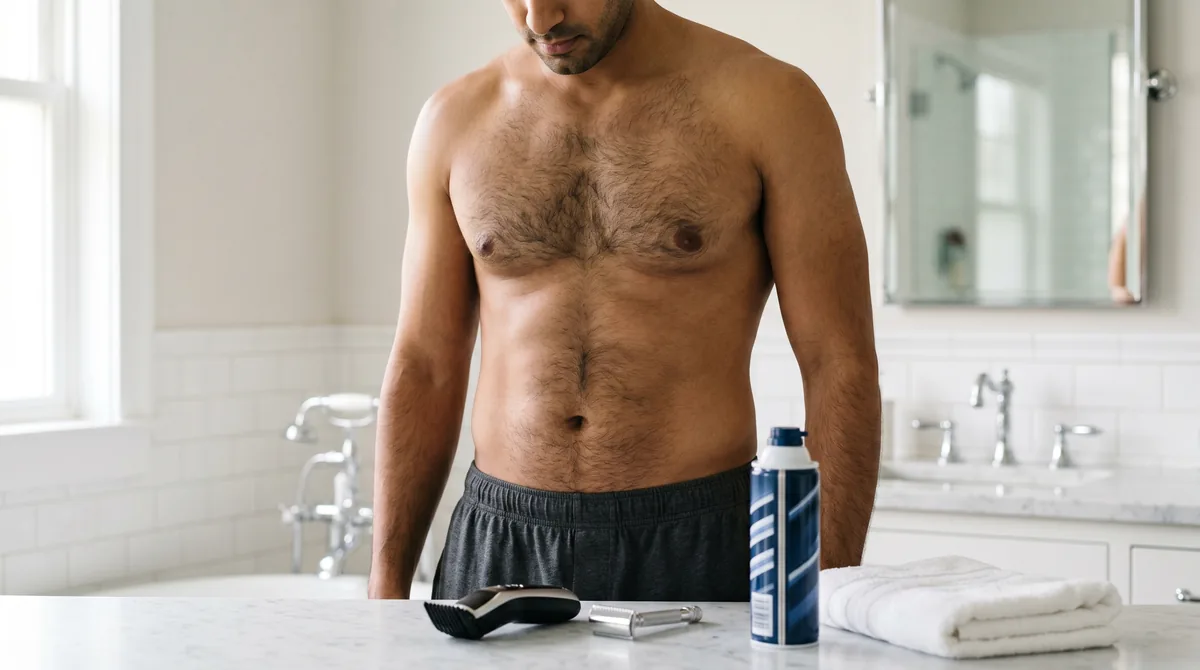

We tested every major approach to body hair grooming over six months with 12 Gulf-based men. Trimming, waxing, shaving, leaving it natural. Here’s what actually works in heat and humidity, what causes problems, and what you should skip.
The question isn’t whether body hair is acceptable. It’s whether your current approach is causing discomfort, hygiene issues, or appearance problems you’d rather avoid. Most men we interviewed had tried something, regretted it, and never tried again. That’s a methodology problem, not a body hair problem.
This guide covers chest, stomach, back, and shoulder hair. We’ll address the practical trade-offs of each method, what works in Gulf conditions, and how to avoid the irritation and ingrown hairs that ruin most grooming attempts. This article contains affiliate links. See our affiliate disclosure for details.
The Three Realistic Options (And What We Found)
After testing, we narrowed body hair management to three approaches that actually work: trimming to a uniform short length, professional waxing, or leaving it natural with proper hygiene. Everything else (home waxing, depilatory creams, DIY laser) caused more problems than it solved.
Trimming won for most men. It’s low-effort, reversible, and doesn’t cause the ingrown hair epidemic we saw with waxing and shaving. You maintain some coverage (which helps with sweat management) while keeping length controlled. Our verdict: if you’re unsure, start here.
Waxing works if you can afford professional sessions every 4-6 weeks and your skin tolerates it. Half our test group got significant ingrown hairs after waxing. The other half loved the smooth result and found it lasted longer than they expected. This isn’t a method you can evaluate from one session. You need three appointments to know if your skin adapts.
Leaving it natural is valid if you’re maintaining the surrounding area (neck, shoulders) and managing hygiene. The issue in Gulf heat isn’t the hair itself, it’s the sweat and product buildup that accumulates when you’re not washing properly. Natural doesn’t mean neglected. We’ll cover the hygiene system below.
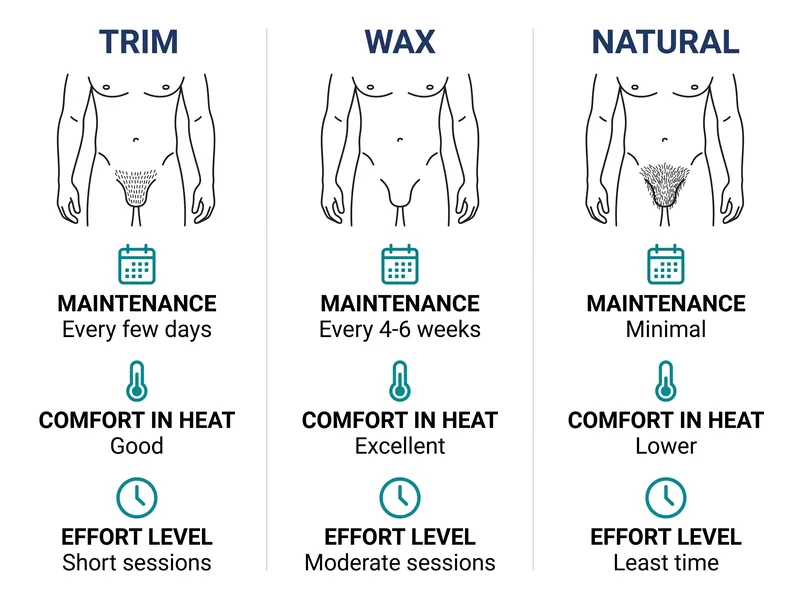 Three approaches to body hair: each has trade-offs for Gulf climate conditions
How to Trim Body Hair Without Irritation
Use a body-specific trimmer with adjustable guards. Face trimmers are too small. We tested Philips Bodygroom, Manscaped, and Braun body trimmers. All worked. The key feature: a guard that keeps the blade off your skin entirely. Start with a 6mm guard, then go shorter if you want. You can always trim more. You can’t untrim.
Trim dry, before showering. Wet hair clumps and clogs the trimmer. Go with the grain first (the direction hair naturally grows). If you want it shorter, make a second pass across the grain. Never go against the grain on the first pass or you’ll get irritation and uneven length.
For chest and stomach: work in sections. Start at the collarbone, move down in overlapping vertical passes. For back and shoulders: you need a partner or a mirror system. Don’t twist yourself into contortions trying to reach your shoulder blades. Ask for help. It takes three minutes.
Maintenance: trim every 10-14 days. Set a recurring reminder. If you let it go a month, the contrast between trimmed and grown-out areas looks worse than if you’d never started. Consistency matters more than perfection.
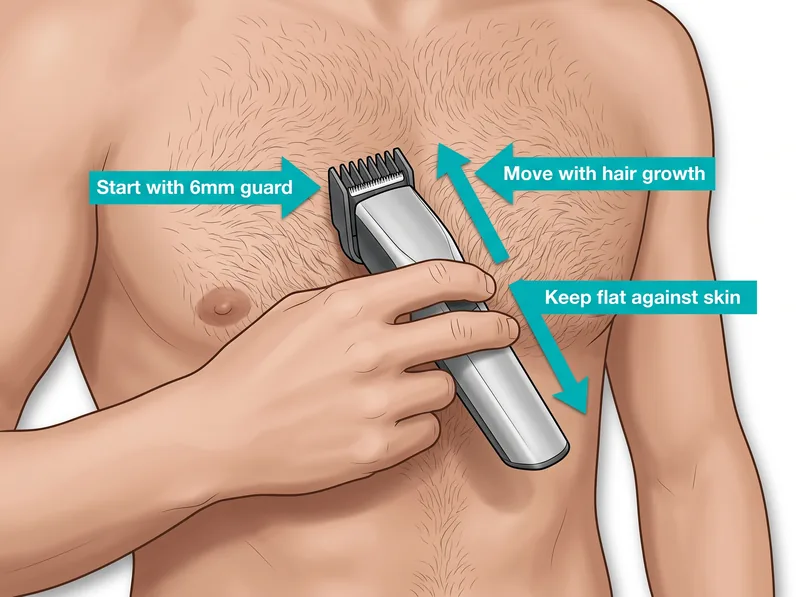 Trimmer technique matters: go with the grain first, adjust length gradually
Waxing: What to Expect and How to Prepare
Professional waxing works better than home kits for body hair. The aesthetician can see the angles, pull at the correct tension, and work faster than you can on yourself. Expect 30-45 minutes for chest and stomach, 20-30 minutes for back. It hurts. Not unbearable, but it’s not pleasant. The first session is worst. Subsequent sessions hurt less because hair grows back finer.
Preparation matters. Hair needs to be 5-6mm long for wax to grip properly. If you’ve been trimming short, let it grow for two weeks before your appointment. Exfoliate the area the day before (not the day of) to remove dead skin that can trap hairs. Skip caffeine and alcohol the day of your appointment; both make skin more sensitive.
Expect redness and sensitivity for 24-48 hours after waxing. Don’t schedule it the day before a beach trip or important event. Wear loose cotton clothing afterward. Avoid gym workouts and heavy sweating for 24 hours. Your pores are open and vulnerable to bacteria.
The ingrown hair risk is real. Half our test group developed ingrown hairs within a week of their first wax. Exfoliating three times per week and using a salicylic acid toner reduced ingrowns significantly, but didn’t eliminate them. If you’re prone to ingrowns on your face after shaving, you’ll probably get them after waxing. Consider that before committing.
The Natural Approach: Hygiene Without Removal
Leaving body hair natural works if you’re managing sweat and product buildup properly. In Gulf heat, that means showering after any activity that causes sweating, using a chelating body wash, and actually scrubbing the hair-covered areas. Most men don’t. They rinse and assume water alone is cleaning.
Here’s what we found: body hair traps sweat, deodorant residue, and minerals from hard water just like scalp hair does. If you’re not using a proper surfactant-based cleanser and physically agitating the area, you’re leaving a layer of buildup that causes odor and skin irritation. A chelating shampoo like Regrowth+ works on body hair for the same reason it works on your head: it breaks down mineral and product buildup that water alone can’t remove.
Use a body scrub or exfoliating glove once a week on hair-covered areas. This prevents dead skin and product buildup from accumulating at the base of hairs. We tested several body scrubs; the ones with salicylic acid worked best for preventing the small bumps and irritation that develop in humid conditions.
Trim the perimeter. Even if you’re leaving chest hair natural, clean up the neck line and the stray hairs on your shoulders. The contrast between groomed edges and natural coverage looks intentional. Unkempt edges make the whole area look neglected.
 After-grooming care prevents the irritation that ruins the result
What Doesn’t Work (And Why We Stopped Testing It)
Depilatory creams (Nair, Veet) caused chemical burns on four of our 12 testers. The ones who didn’t get burns still reported intense itching during regrowth. These products use alkaline chemicals to dissolve hair at the surface. They’re harsh, they smell terrible, and the regrowth is stubbly within days. We don’t recommend them for body use.
Home waxing kits failed consistently. Incorrect temperature, poor technique, and inability to pull at the right angle meant most attempts left patchy results and broken hairs that became ingrowns. If you’re determined to wax, pay for professional service. The cost difference isn’t worth the frustration of failed home attempts.
At-home laser devices showed minimal results after three months of use. The technology works in clinical settings, but consumer devices don’t have enough power to produce permanent reduction for most users. If you want laser hair removal, see a dermatology clinic with medical-grade equipment. Don’t waste money on home devices.
Shaving body hair with a razor creates immediate smoothness followed by rapid, stubbly regrowth and widespread ingrown hairs. Every tester who shaved their chest regretted it within a week. The irritation and itching during regrowth aren’t worth the temporary result. If you want smooth, wax. If you want low-maintenance, trim.
Post-Grooming Care That Actually Prevents Problems
Regardless of method, the 48 hours after grooming determine whether you get irritation and ingrowns. Immediately after trimming or waxing, rinse the area with cool water and apply an alcohol-free toner (witch hazel works). This removes loose hairs and closes pores without stinging.
Moisturize within 10 minutes of grooming. Use a lightweight, fragrance-free lotion. Heavy creams and fragranced products can clog the hair follicles you just exposed. We tested Cetaphil, CeraVe, and Eucerin body lotions. All worked. The key is applying while skin is still slightly damp to lock in hydration.
Exfoliate three times per week starting 48 hours after grooming. Use a salicylic acid body wash or a physical exfoliant (scrub or exfoliating glove). This prevents dead skin from trapping new hair growth under the surface. Most ingrown hairs develop between day 3 and day 7 after grooming. Consistent exfoliation during this window reduces them significantly.
Wear loose, breathable clothing for 48 hours after waxing. Tight shirts and synthetic fabrics trap heat and bacteria against vulnerable skin. Cotton and linen are better. If you’re grooming in summer, time it so you’re not immediately going into heavy sun exposure or chlorinated pool water. Both increase irritation risk.
Gulf-Specific Considerations
Heat and humidity change the equation. Body hair helps manage sweat by increasing surface area for evaporation. Removing it entirely means sweat sits directly on skin, which can cause rashes and fungal issues in humid conditions. If you’re waxing or shaving smooth, you need to shower more frequently and use antifungal powder in areas prone to chafing.
Hard water affects body grooming the same way it affects your scalp. Mineral buildup on body hair makes it feel coarse and wiry. If you’re leaving hair natural, you need a chelating body wash to remove this buildup. Regular soap doesn’t cut it. The same chemistry that damages scalp hair applies to body hair wherever water touches skin.
Chlorine from pools and salt from seawater dry out body hair and skin. If you’re swimming regularly, rinse immediately after with fresh water and use a moisturizing body wash. Don’t let chlorinated or salt water dry on your skin. It increases irritation and makes trimmed or waxed areas more prone to ingrowns.
Professional waxing services vary widely in the region. Ask about the type of wax used (hard wax is better for body hair than soft wax), hygiene practices (single-use applicators only), and whether the technician has experience with male body waxing. Not all salons that advertise body waxing actually do it well for men. Read reviews and ask specific questions before booking.
References
- How to Prevent Ingrown Hairs - American Academy of Dermatology
- Comparison of Hair Removal Methods and Their Impact on Skin - PubMed
- Salicylic Acid in Dermatology: A Review of Uses and Properties - PubMed Central
- Hair Removal: Options and Considerations - Cleveland Clinic